 Français
 English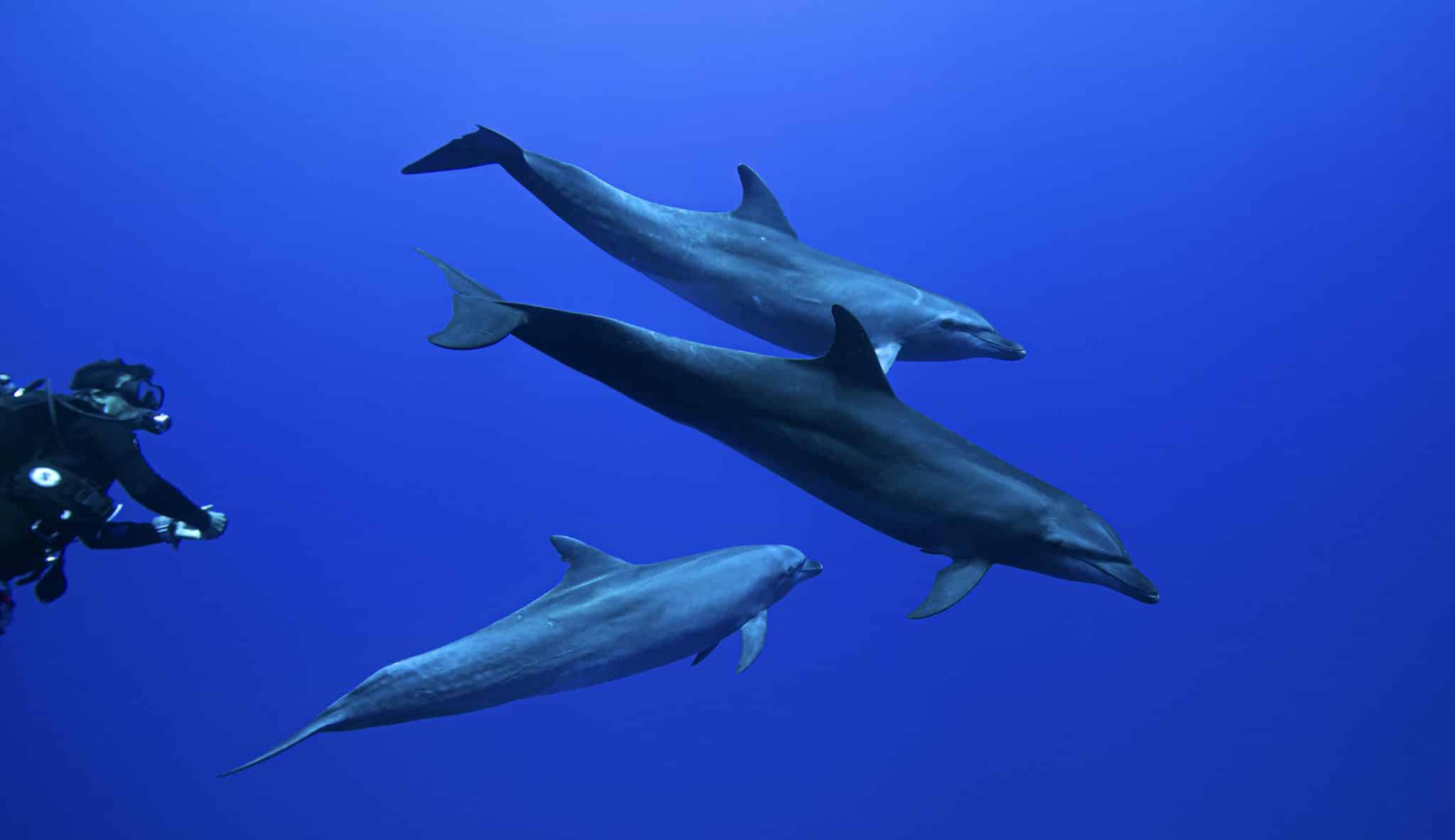

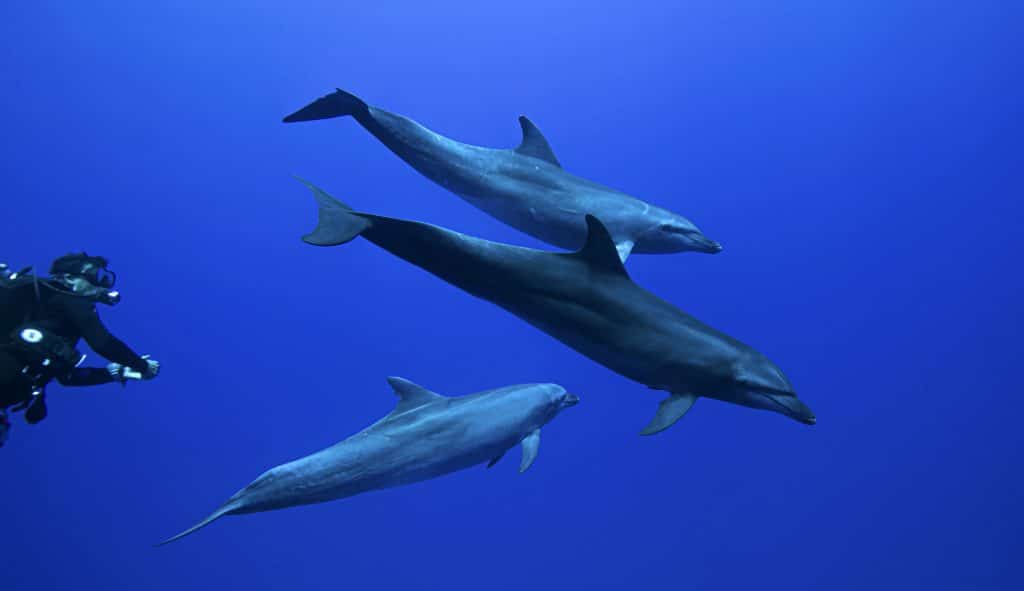
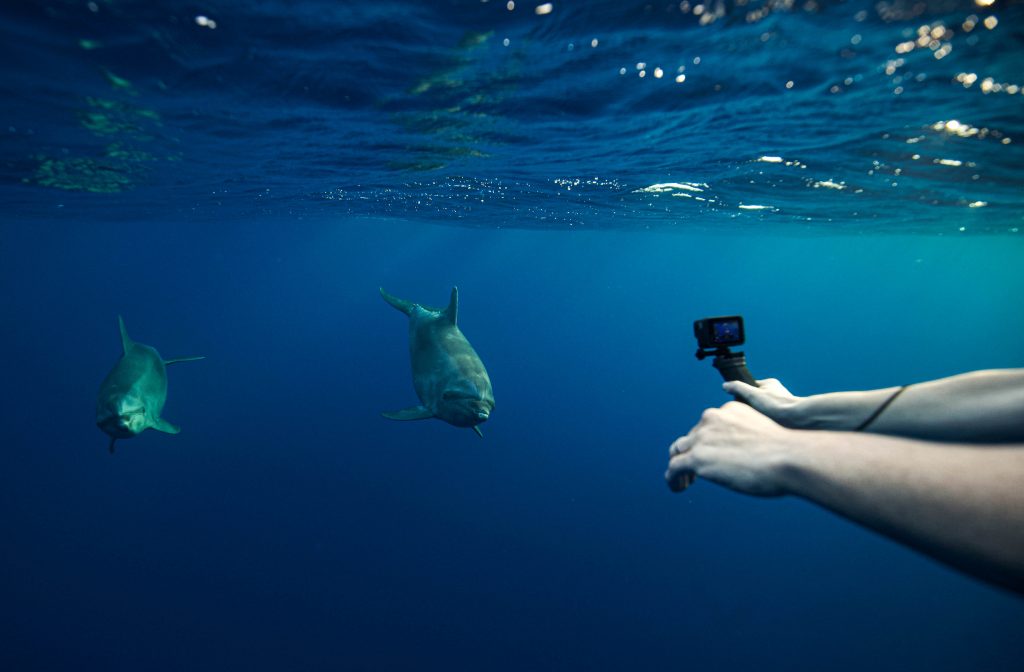
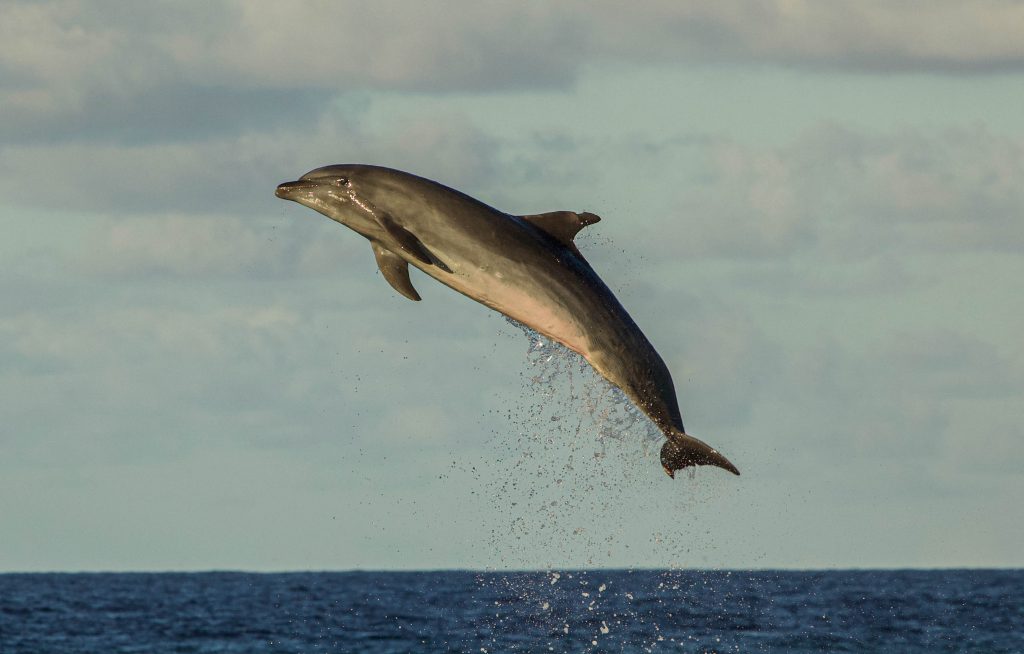
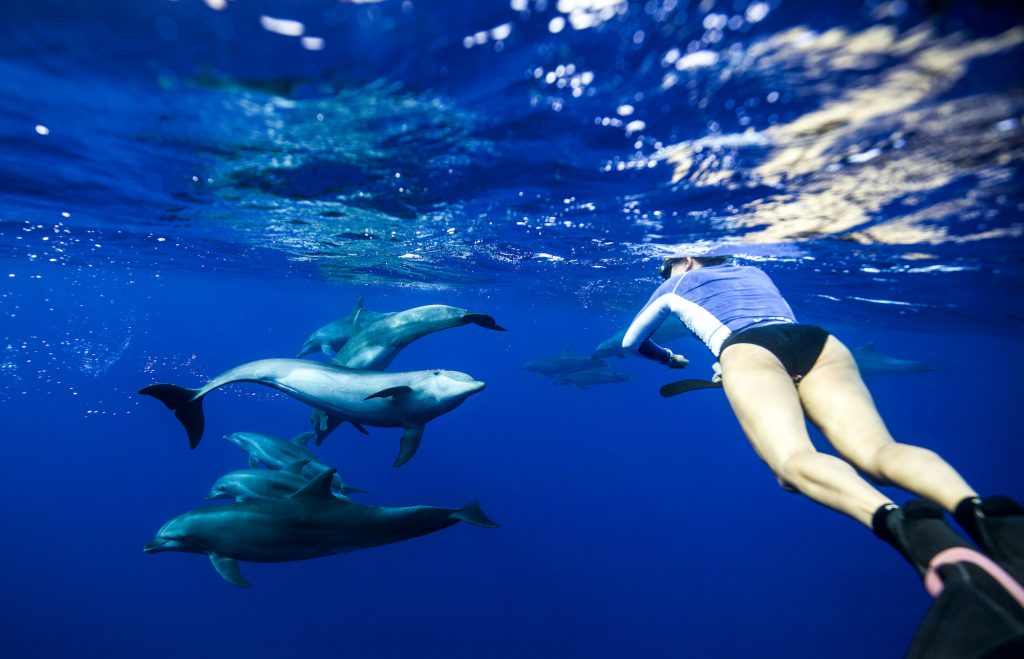

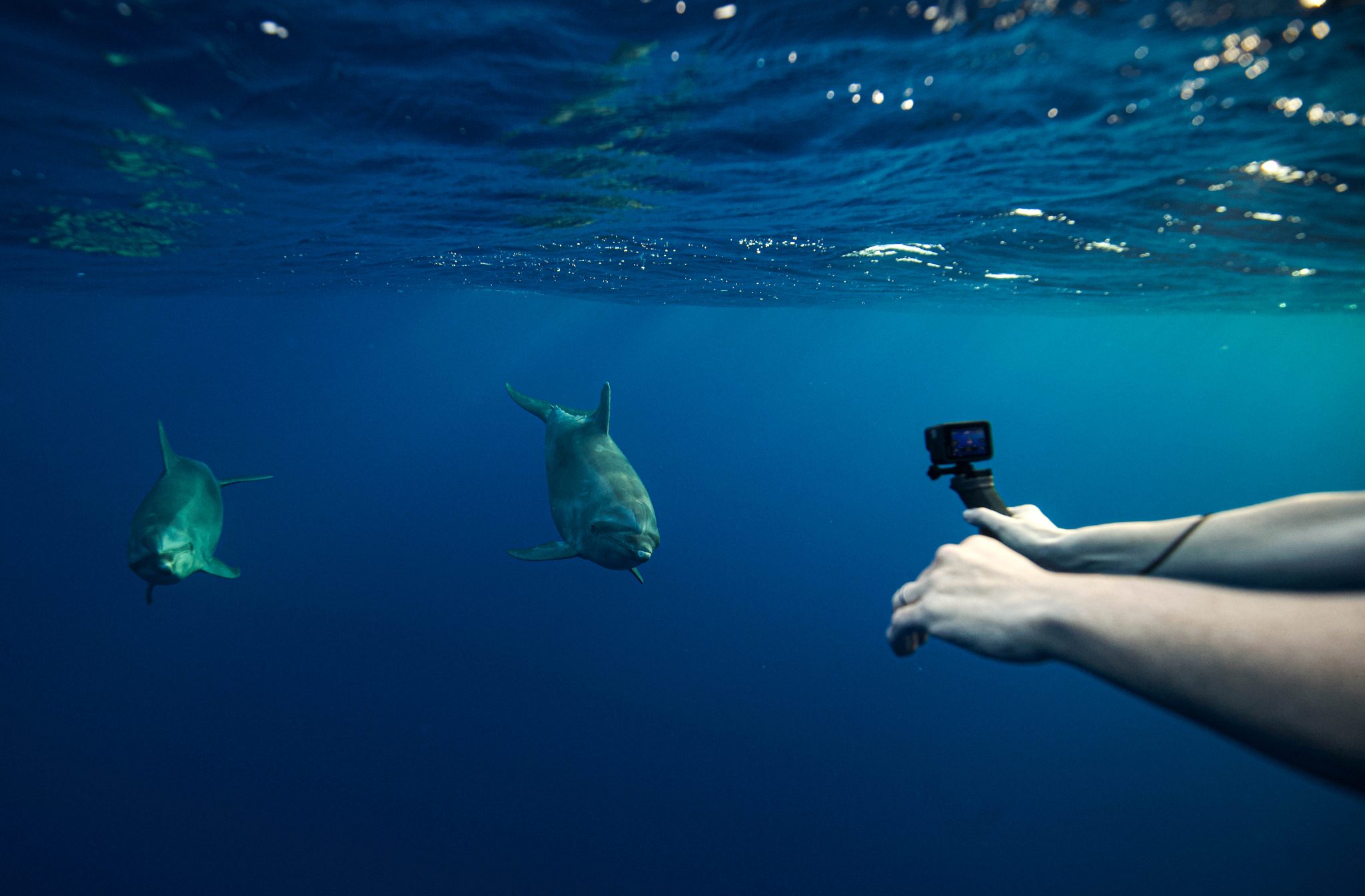
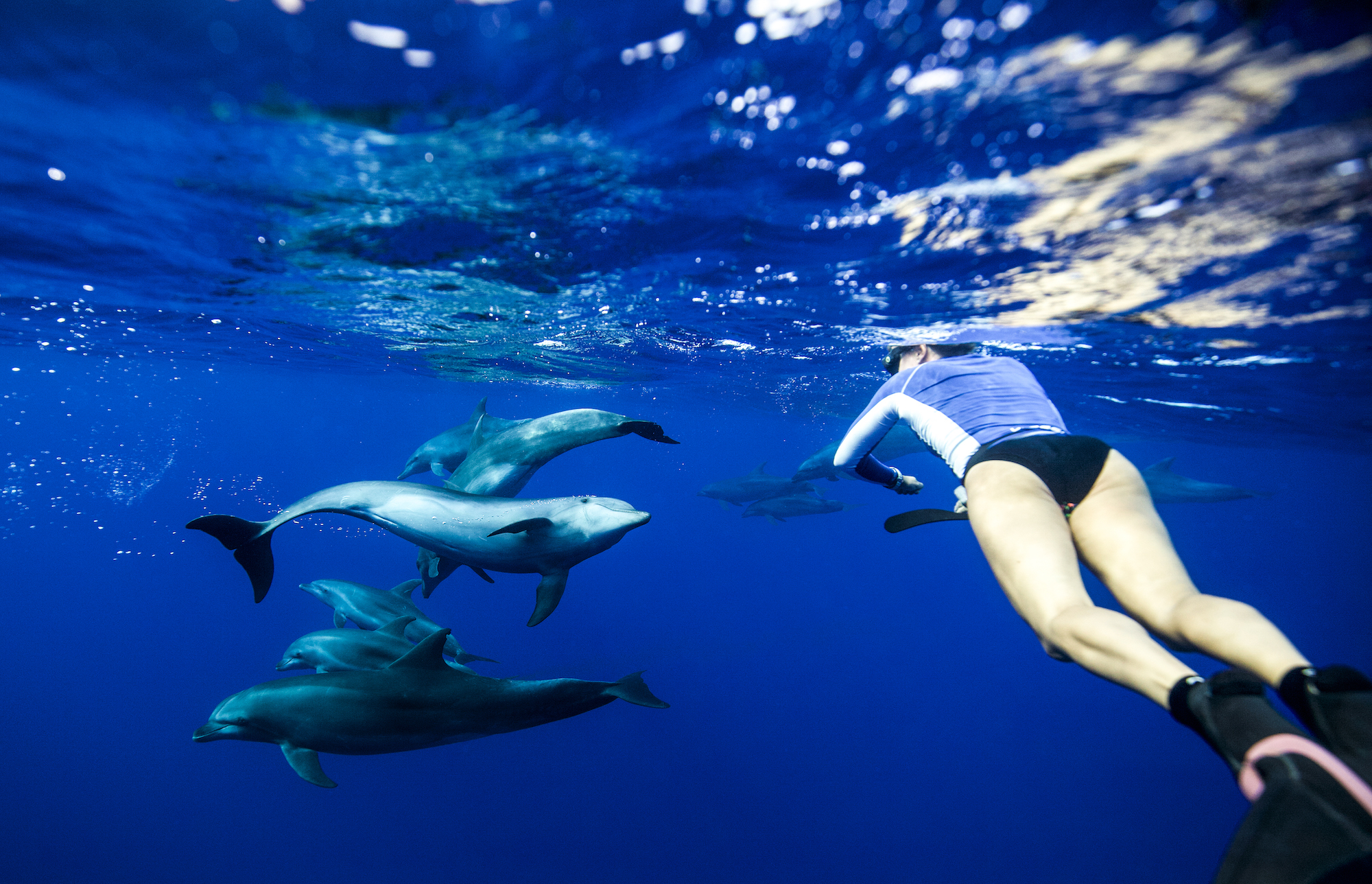
Set off as an volunteer to Rangiroa in French Polynesia to study a pod of dolphins. Forget all your preconceptions about dolphins… We invite you to immerse yourself, both literally and figuratively, in the world of a group of bottlenose dolphins targeted by a new form of wildlife tourism. You’ll get to know Maui, Tikei and the other members of the ‘Tiputa community’ better and gain an understanding of the challenges involved in their conservation. All programmes involving cetaceans here
The human-animal relationship at the heart of the research
For the past 40 years or so, encounters between humans and ‘wild’ animals have never been more popular, giving rise to a new form of tourism that is fraught with paradoxes. Indeed, more and more people want to have close and predictable contact with iconic animal species. However, these repeated close encounters have caused a change in their behaviour through processes such as habituation or conditioning.
The case of dolphins is a prime example
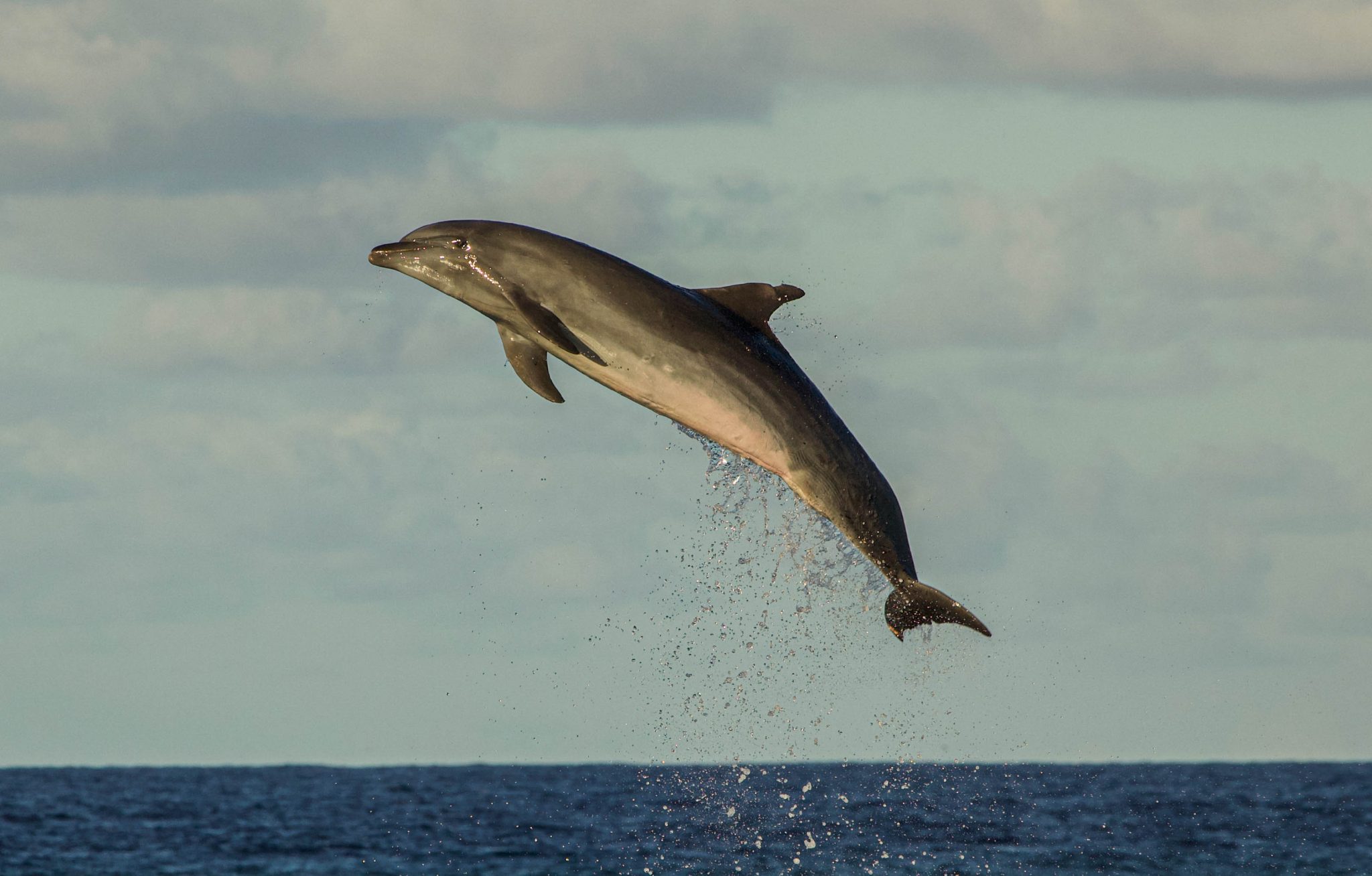
The case of dolphins is a prime example of this issue. As iconic animals par excellence, these cetaceans – who are the subject of numerous cultural prejudices – are at the heart of the current trends in wildlife viewing. The bottlenose dolphin was made famous by the television series ‘Flipper’. Furthermore, the shape of its mouth, which curves upwards, gives it a ‘smiling’ appearance. However, this “appearance” does not reflect the reality of the species, whose behaviour, and particularly its social life, is extremely complex and characterised by both affiliative behaviours – play, affection – and agonistic behaviours – intimidation, aggression. The numerous marks and scars visible on the bodies of adult males illustrate the power of these animals.
The dolphin community of Rangiroa
Bottlenose dolphins (Tursiops truncatus) have been recorded in all five Polynesian archipelagos. However, it is in the north-western part of the Tuamotu Islands, and particularly around Rangiroa, that the species appears to be most frequently sighted. In French Polynesia, adults measure up to 3.3 metres in length and weigh up to 450 kilograms. They are easily identifiable by their stocky, greyish body, ending in a thick beak separated from the melon – the forehead – by a distinct groove.
Pamela Carzon, PhD in ethology
In Rangiroa, the largest atoll in French Polynesia, Pamela Carzon, a doctor of ethology and president of the Dauphins de Rangiroa association, has been coordinating the demographic, ecological and ethological monitoring of a community of bottlenose dolphins, known as Tursiops truncatus, for over twelve years. It so happens that these dolphins are the focus of diving tourism activities that encourage close and regular interactions between humans and animals.
The relationship between humans and wild animals
Pamela Carzon’s research focuses on the history, personality and behavioural profile of each dolphin in the ‘Tiputa community’.
The aim of her work is:
- Long-term demographic and ecological monitoring of the bottlenose dolphin community in the Tiputa area. Monitoring of the community structure, the degree to which the dolphins reside in Tiputa, their social organisation, their reproduction, and their diet…
- Describing and understanding the impact of tourism activities on dolphin behaviour and the risks associated with close encounters between dolphins and divers.
- The development of ethical tourism that takes the welfare of cetaceans into account.
- Raising public awareness of a complex situation within a global ecological context that requires urgent and effective management of the relationship between humans and wildlife.
The work of eco-volunteers with the dolphins of Rangiroa
This eco-volunteering project is a participatory tool for monitoring the population, ecology and behaviour of a community of wild animals that are, in principle, protected. It enables participants to observe and gain a better understanding of the daily life of a pod of dolphins and the many challenges associated with their conservation. Hosting volunteers enables the association to sustain its programme for monitoring the behaviour and health of these animals.
Between sea trips and training
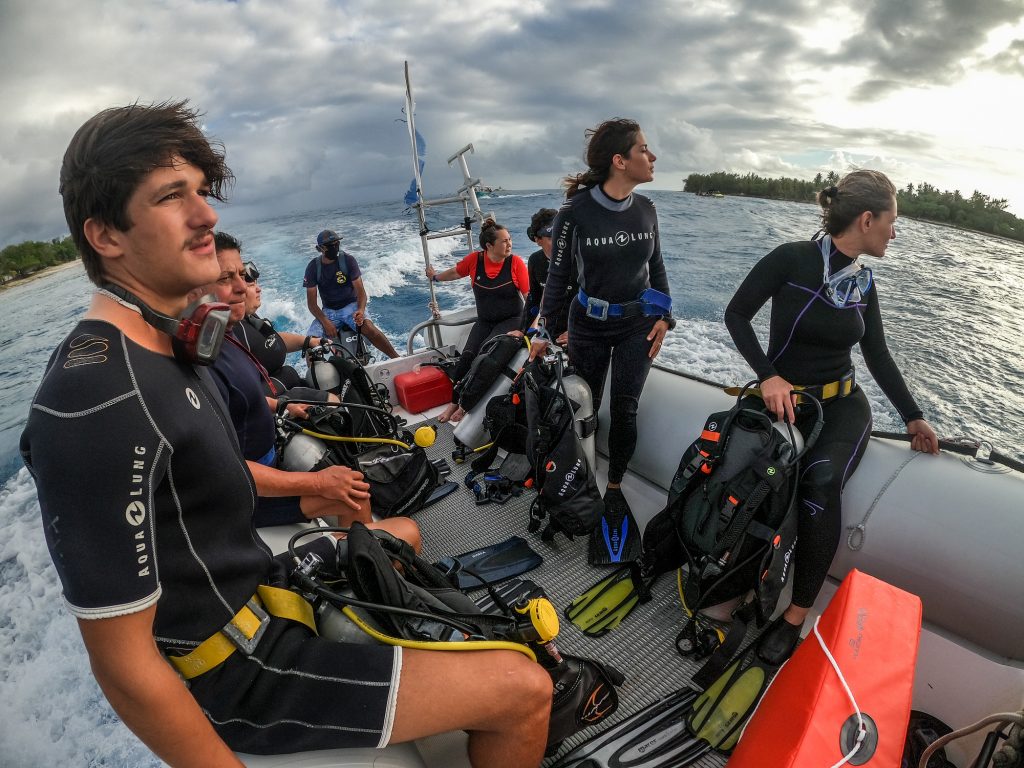
The days are structured around boat trips, observations from land, debriefings and training sessions. Volunteers learn about, are trained in, and get involved in the work of the research association on bottlenose dolphins, both from a land-based observatory and whilst scuba diving. They are supervised by Pamela, a PhD in ethology and the project’s scientific lead, Martin, the diving instructor, and Irianu, the captain. All three have extensive experience of the area and are passionate about their work.
Examples of a typical day
First day
- Meet at the guesthouse at 10 am;
- Introductions and a presentation of the organisation, as well as the schedule and objectives of the mission;
- Tour of the site, introduction to the wildlife and safety instructions;
- 11.30 am: lunch break;
- 1.30 pm: exploratory trip in the lagoon or first sighting of dolphins at Tiputa Pass.
Day 4
- Morning: dolphin watching in Tiputa Pass whilst scuba diving, followed by a debriefing and data review;
- 11.30 am: lunch break;
- Afternoon: training session – Who are the Tiputa dolphins? How can you tell them apart?
Day 10
- Morning: training session – What are the risks associated with close interactions between dolphins and humans?
- 11.30 am: lunch break;
- Afternoon: diving, followed by a debriefing and data review.
This timetable is provided for information only. It may vary depending on the weather conditions
- 2025 SEASON – SOLD OUT
- 7 June 2026 to 21 June 2026 (15 days, 14 nights)
- 15 November 2026 to 29 November 2026 (15 days, 14 nights)
- 18 October 2026 to 30 October 2026 (13 days, 12 nights)
What you need to know about the Rangiroa dolphin project
- A two-week assignment on specific dates between June and November in Rangiroa, French Polynesia.
- Between three and five participants per mission
- Ten dives per mission
Required diving level
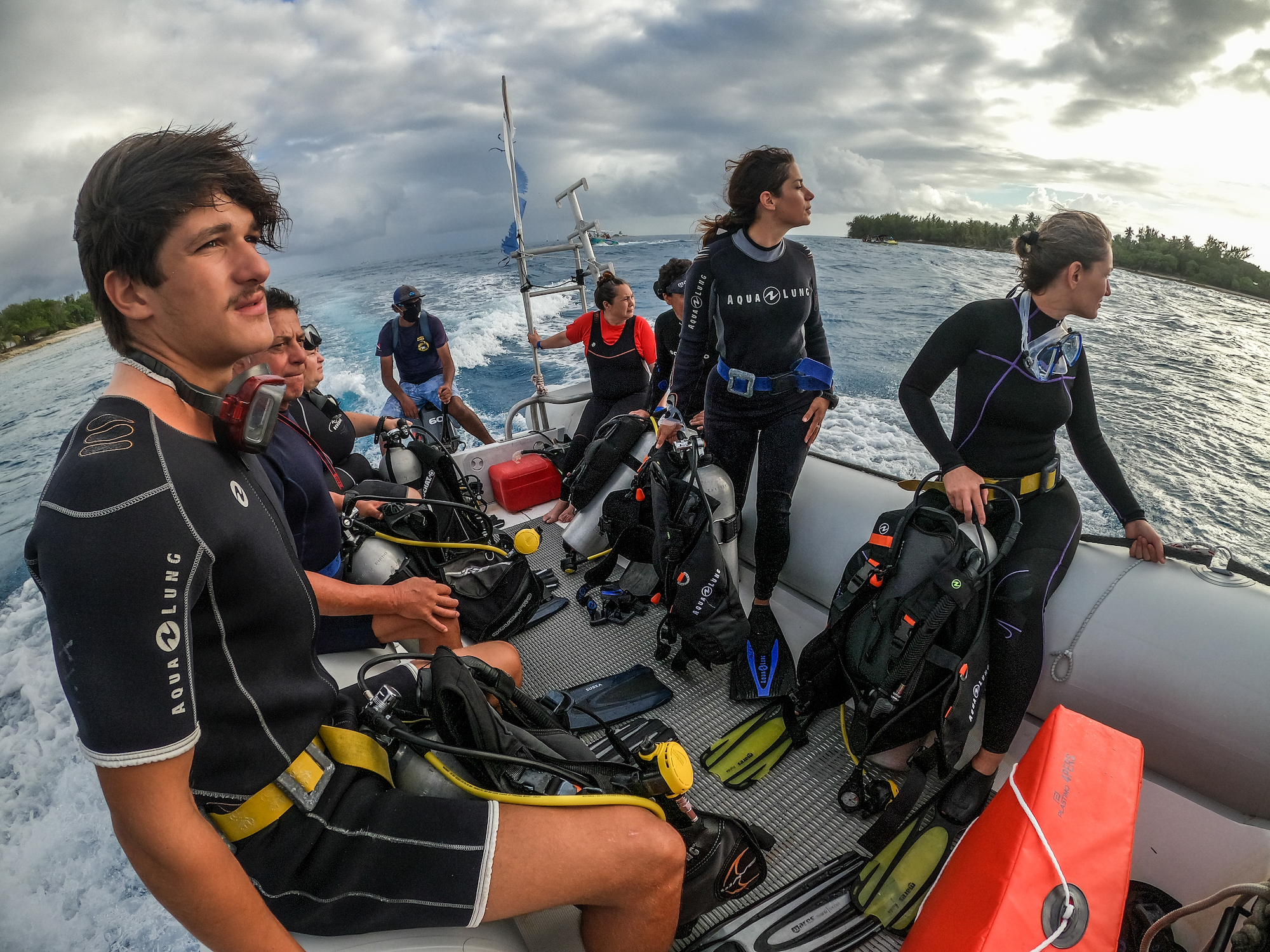
A minimum of Level 1 certification (PADI/SSI Open Water or equivalent) is required to take part in scuba dives, as well as experience of at least 20 dives in the sea or ocean. Please remember to bring your card and logbook, as well as a medical certificate confirming your fitness for scuba diving.
Accommodation and meals
Eco-volunteers are accommodated in a local guesthouse () located a stone’s throw from the dive centre and Tiputa Pass, home to a community of dolphins and many other marine species. They can choose to stay in a dormitory (with a cold-water shower) or a private bungalow (with a hot shower). Breakfast and dinner are provided by the guesthouse, whilst a packed lunch is distributed at the start of the assignment to cover lunch.
You’ll have two days off during your assignment. Usually at the weekend. It’s the perfect opportunity to explore Rangiroa and its treasures!
The Tuamotu Archipelago, in the heart of the Pacific Ocean
Threatened by rising sea levels caused by global warming, the Tuamotu Archipelago comprises 78 atolls scattered across a maritime area of 800,000 square kilometres. These lands, which lie just above the ocean’s surface, are particularly fragile oases of aquatic biodiversity. The Tuamotu atolls are characterised by their size, shape, openness to the ocean, population and the activities carried out there. They feature small enclosed lagoons—some hypersaline or brackish—as well as large lagoons open to the ocean, such as that of Fakarava.
Rangiroa, an oasis of biodiversity
Located 350 kilometres from Tahiti, the Rangiroa Atoll – ‘Grand Ciel’ in Paumotu – is a veritable oasis of life in the heart of the tropical Pacific. With its 170 kilometres of coral reef, sand and coconut palms surrounding a lagoon of 1,600 square kilometres, it is one of the world’s premier diving destinations. The imposing dimensions of this atoll – 80 kilometres long and 20 kilometres wide on average – and its two large passes, Avatoru and Tiputa, located to the north, are home to an underwater fauna that is as exceptional as it is impressive.

About the grassroots organisation in Polynesia
Established in 2019, the partner organisation is based in the Tuamotu Islands. It has fifteen years’ experience of monitoring dolphins and whales in Polynesia, including twelve field seasons carried out with eco-volunteers. DDR’s objectives are scientific and participatory research, conservation, raising awareness and sharing information about the bottlenose dolphins of Rangiroa Atoll. Since 2009, DDR’s scientific director has been studying the community of bottlenose dolphins frequenting the waters around Tiputa Pass, located to the north of Rangiroa Atoll, and in particular the impact of tourist activities on the dolphins’ behaviour.
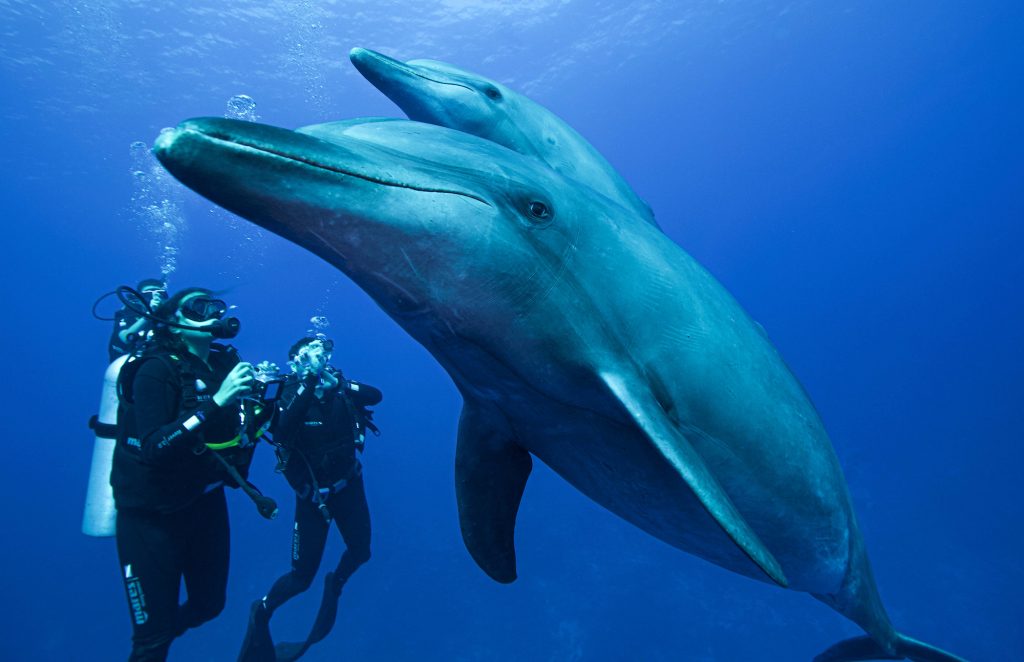 Diving expedition
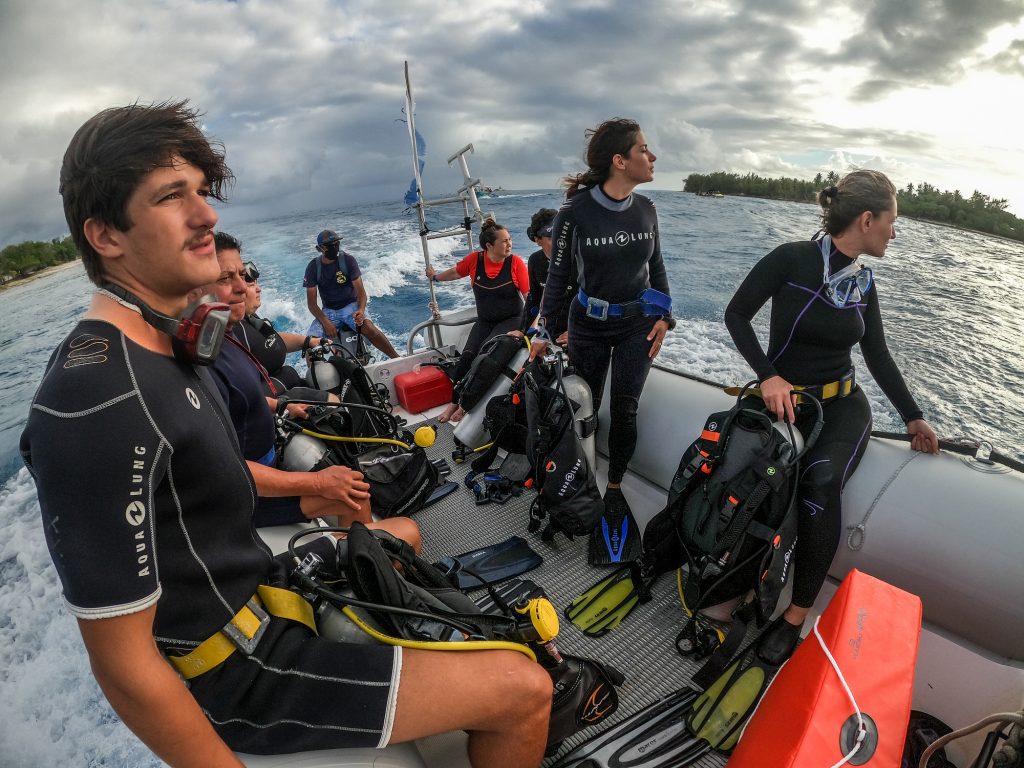 Ten sea trips are planned