 Français
 English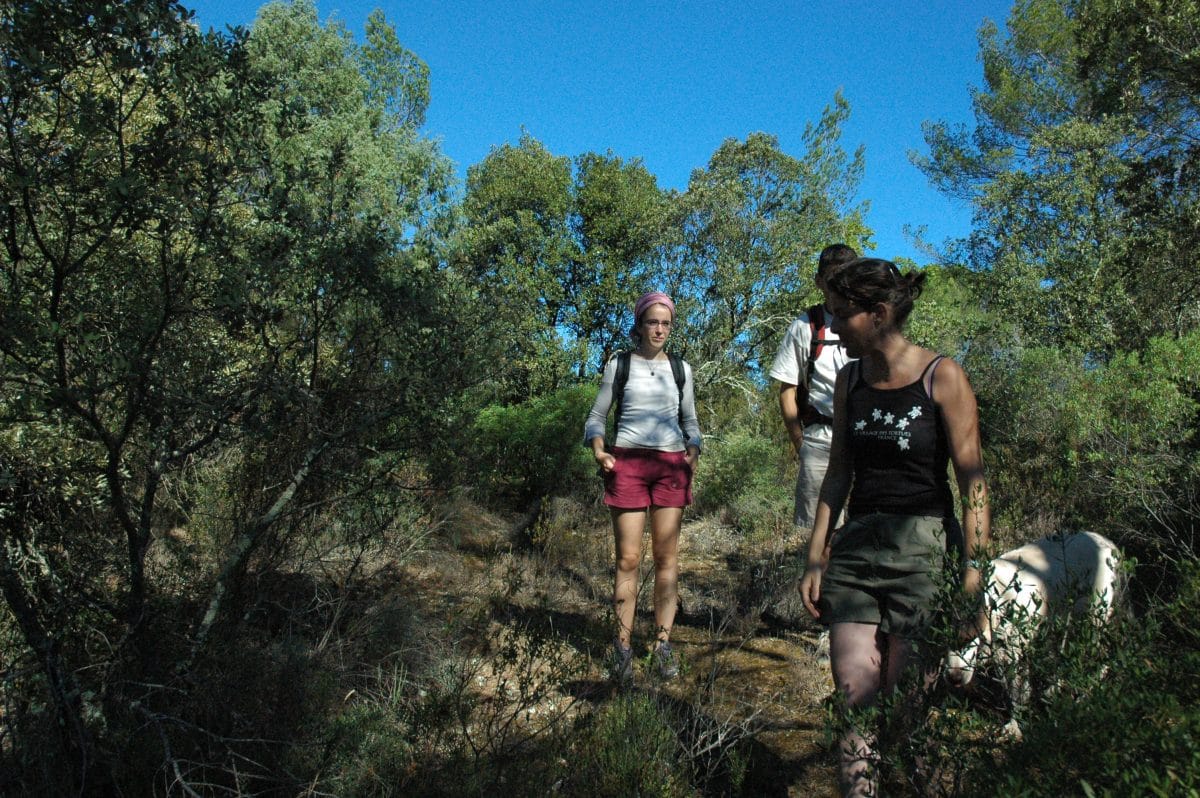
An eco-volunteer’s round-the-world trip: the turtle village in Gonfaron (7/7). There are four of us taking time off this weekend. To mark the occasion, the scientific manager’s assistant takes us – the ‘veterans’ – out into the field to see the turtles in the wild. We set off early in the morning to explore the maquis and watch Mrs Hermann frolicking, but she didn’t do us the honour of showing up… She’s wild, and in this spell of intense heat, with the mistral blowing, she’s no doubt preferring to hide away. Not even the European pond turtles made an appearance, unless Margie, the Labrador, had scared them off by jumping into the muddy water. We were a bit disappointed, but that’s just how it is – nature isn’t an amusement park…
We’re really enjoying this walk; we’re making the most of it to learn more about the tortoises and are becoming aware of the tough battle being fought by the village’s staff. According to one of the leading experts on the Hermann’s tortoise, within fifty years, it could become extinct… because of humans.
The time has come to say goodbye. Still a bit dazed after that crazy night, I wander round the village to gaze at the tortoises one last time. The European pond tortoises, the African sulcata tortoises, the Madagascar radiata tortoises, the hatchlings and, finally, Mrs Hermann… There they are, calm, serene, steadfast. With their benevolent gaze, like that of an elderly grandmother, they embody stability. Turtles have lived on Earth for 230 million years. They appeared long before the dinosaurs, survived the asteroid that ravaged the planet 65 million years ago, weathered the ice ages and witnessed the emergence of their main predator today… man.
Read more from an eco-volunteer’s round-the-world diary
