Français
 English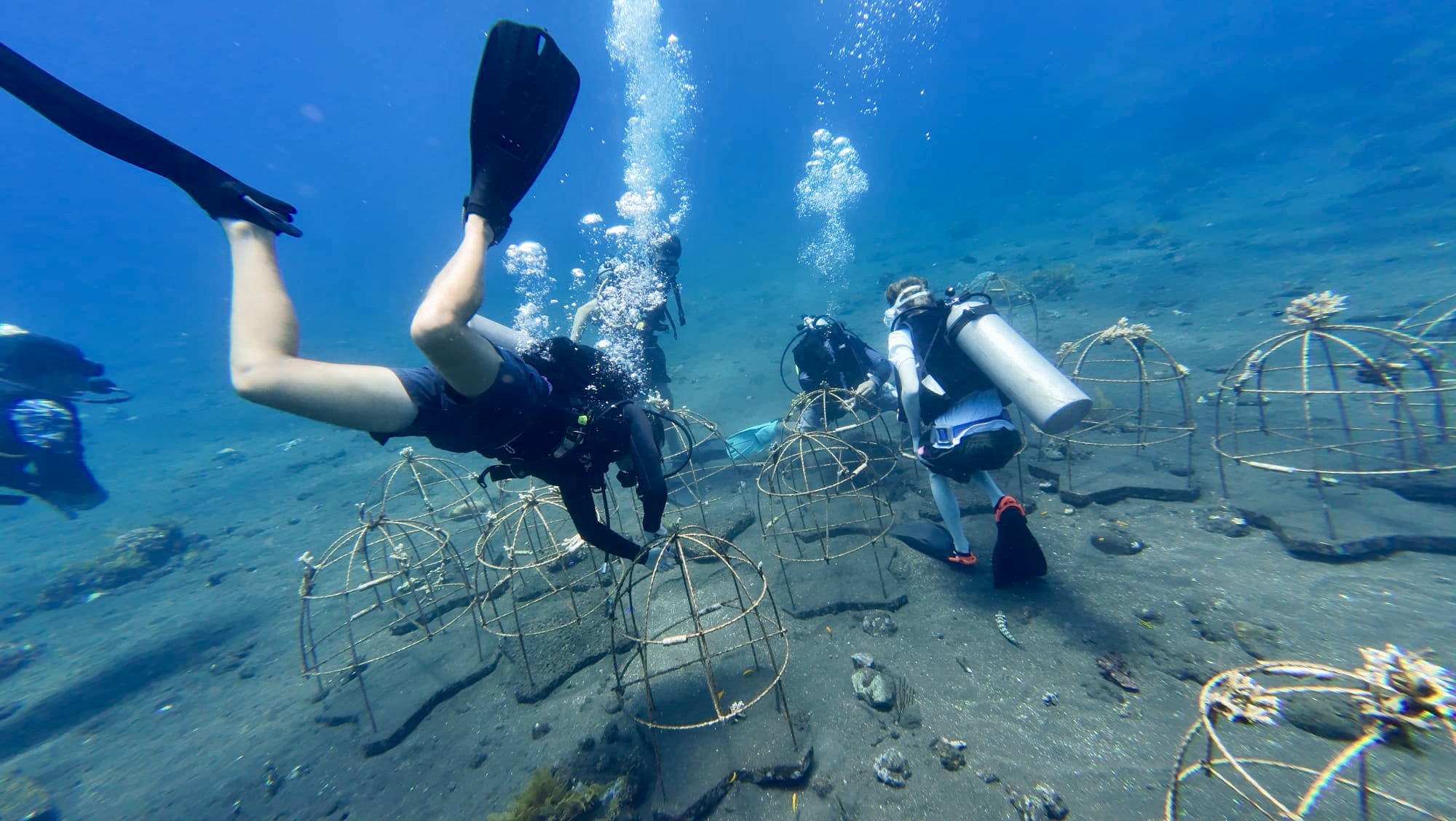
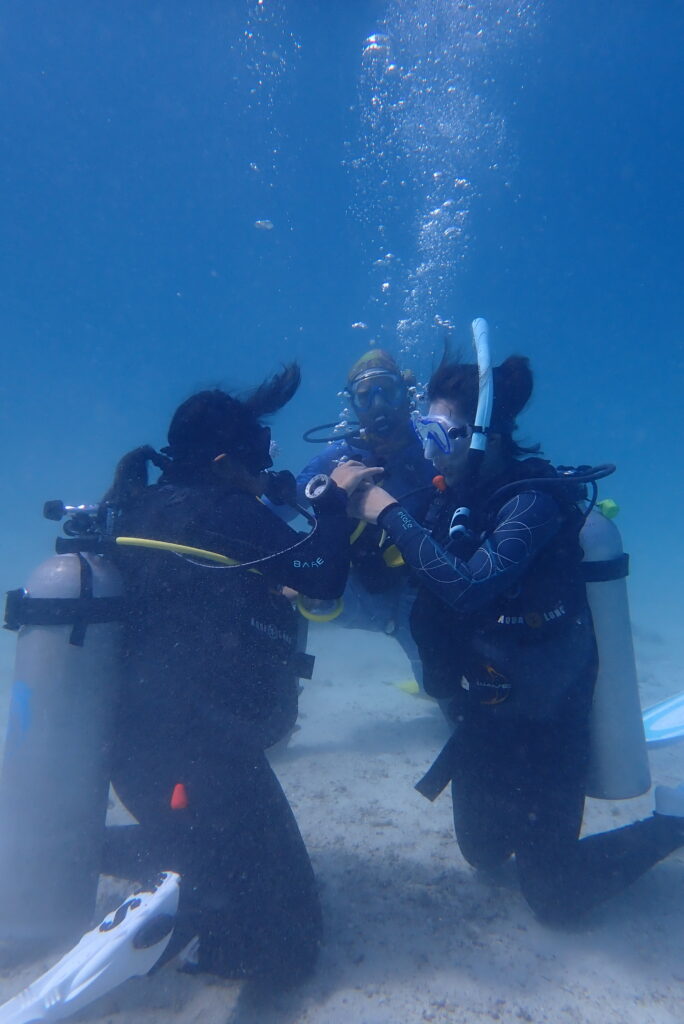
 Vous travaillerez par équipe de deux
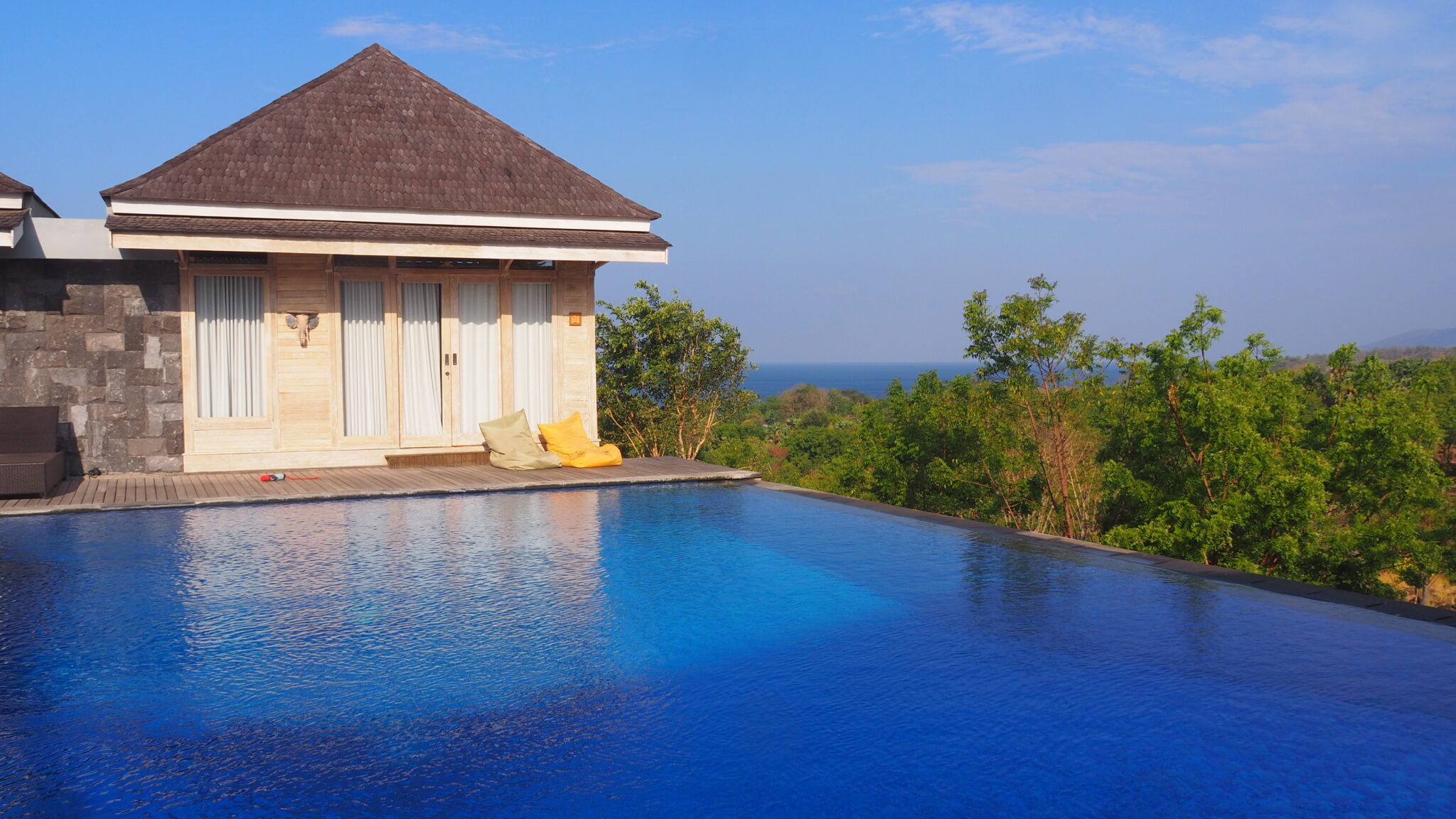
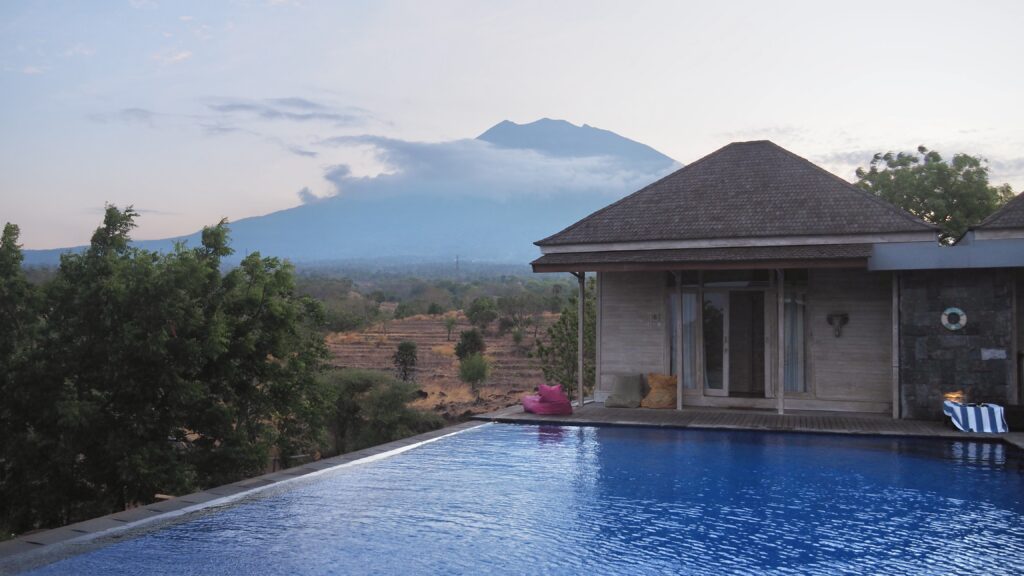 Logement des plongeurs qui participent au programme de conservation
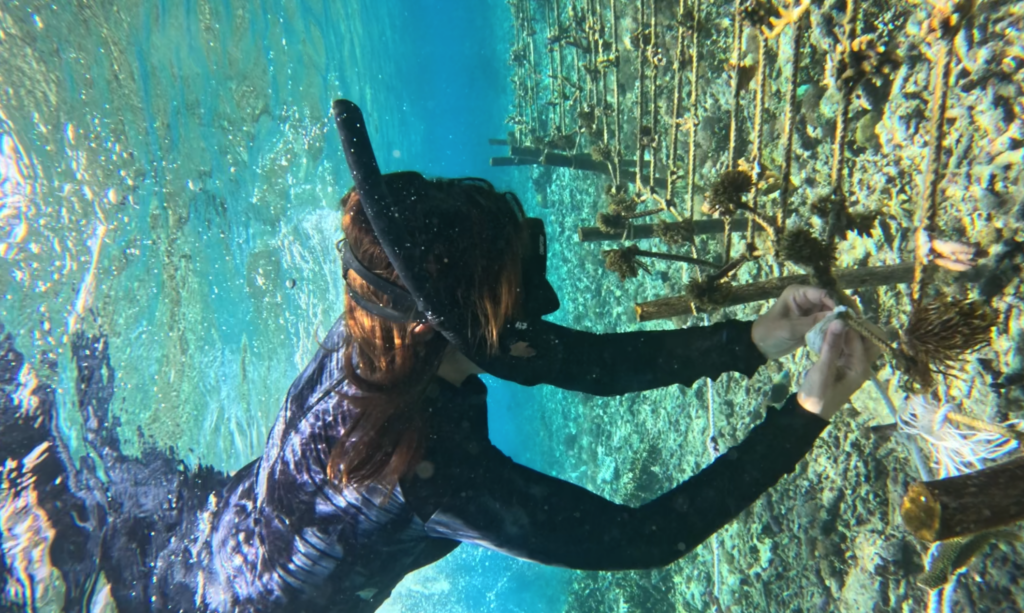
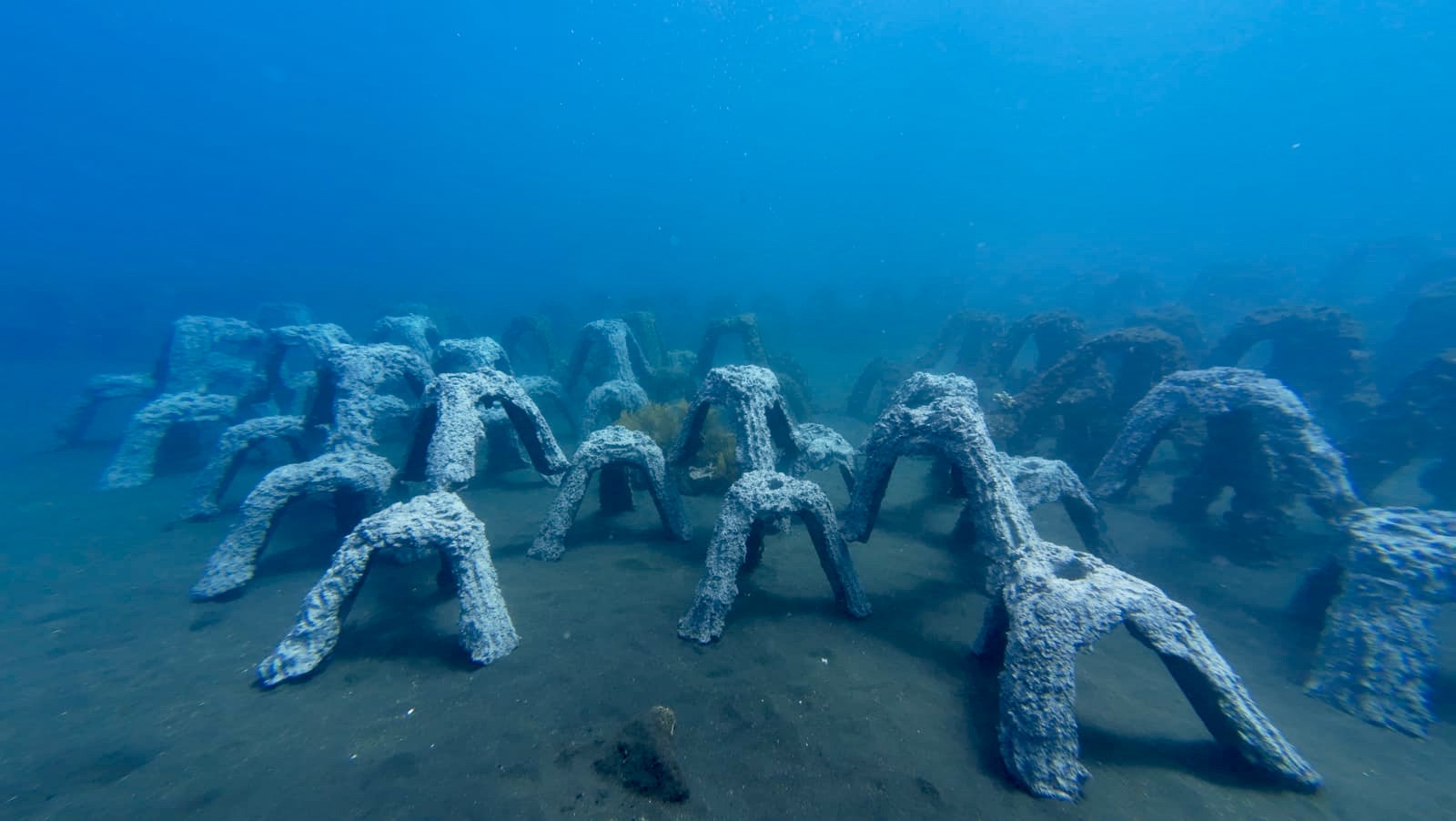
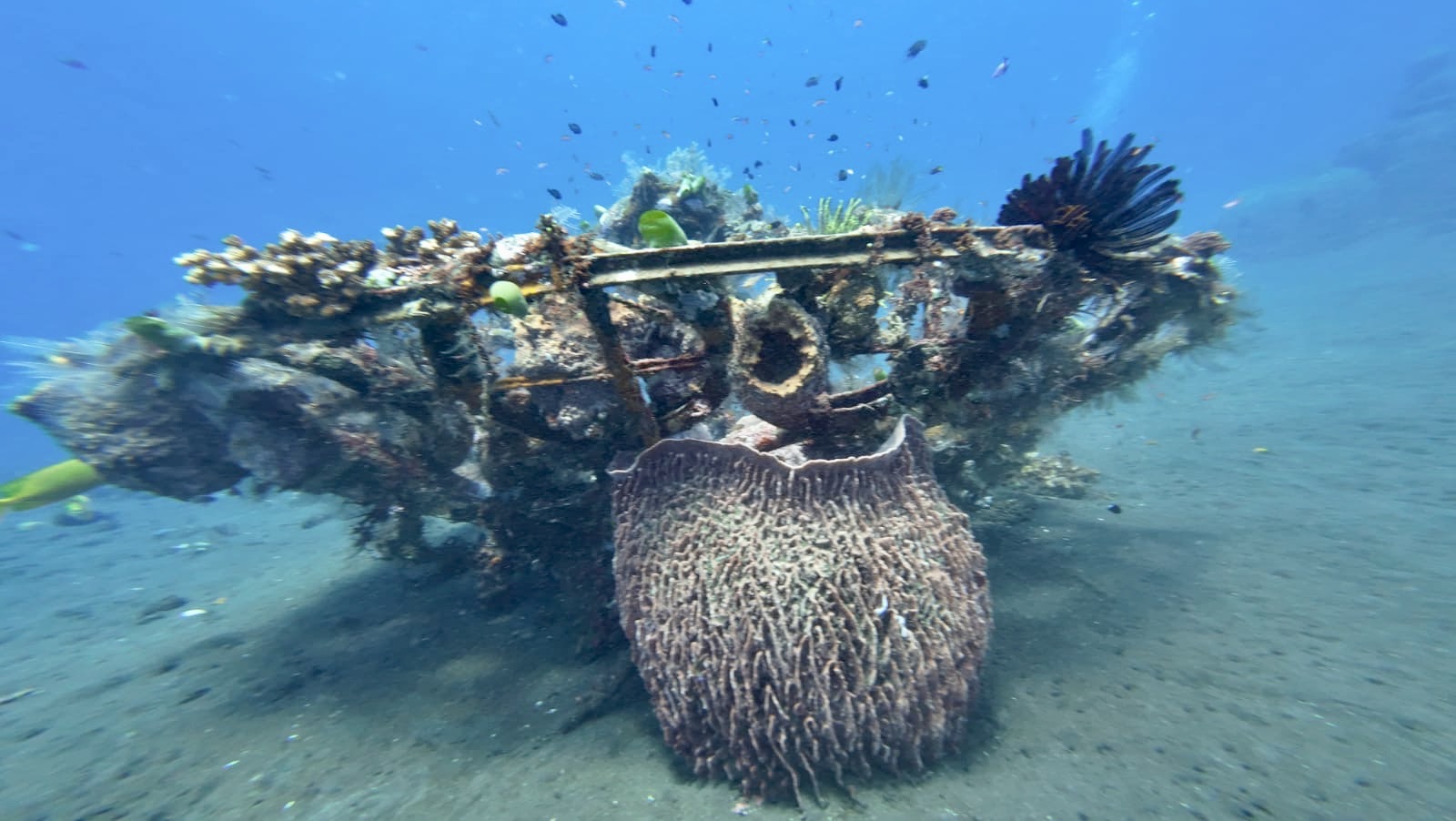
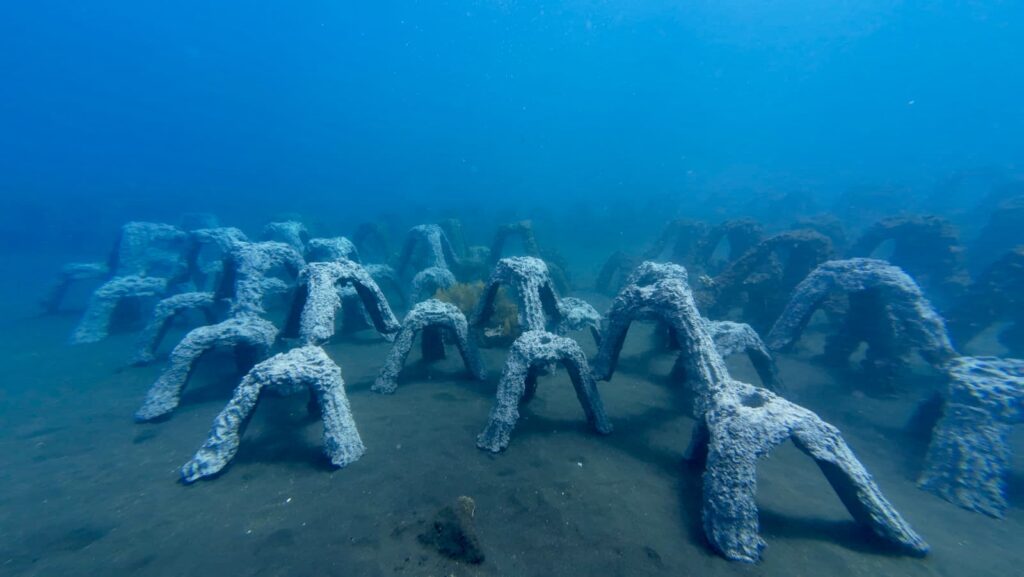 Structures artificielles pour restaurer les récifs coralliens
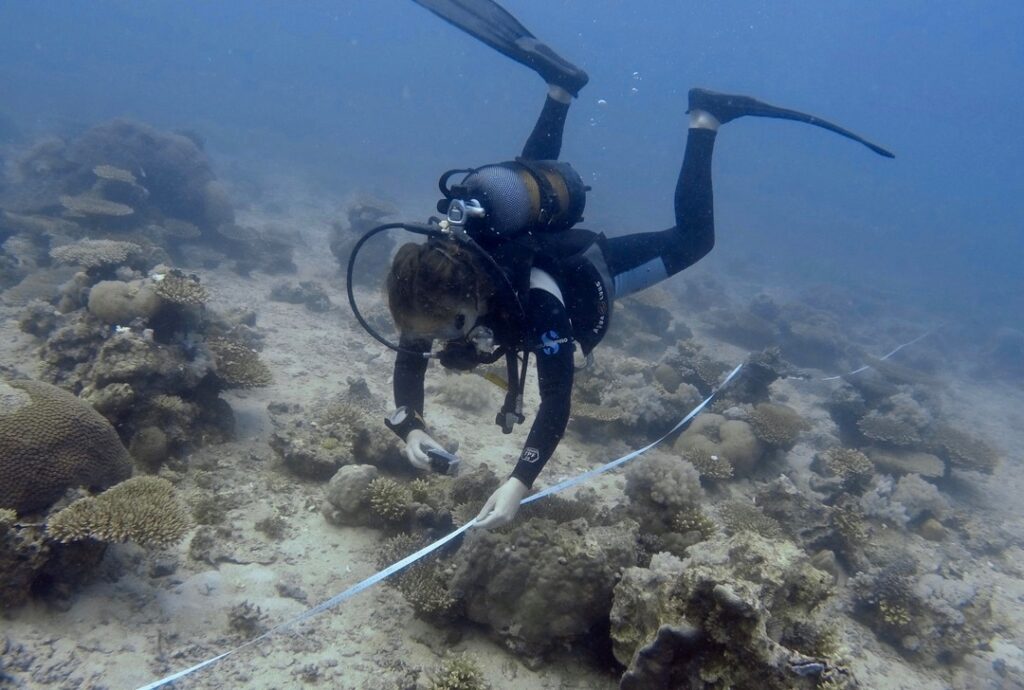
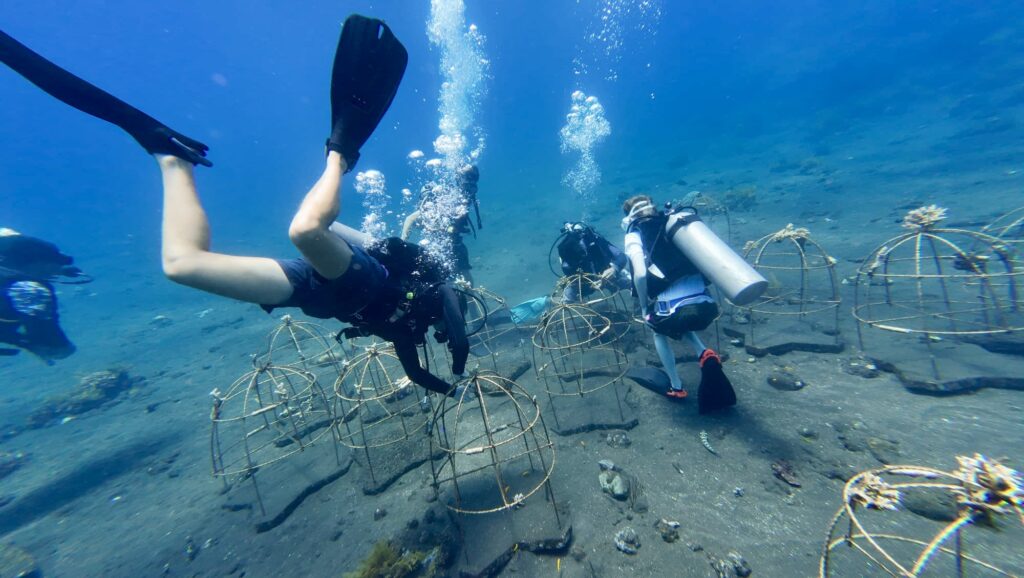
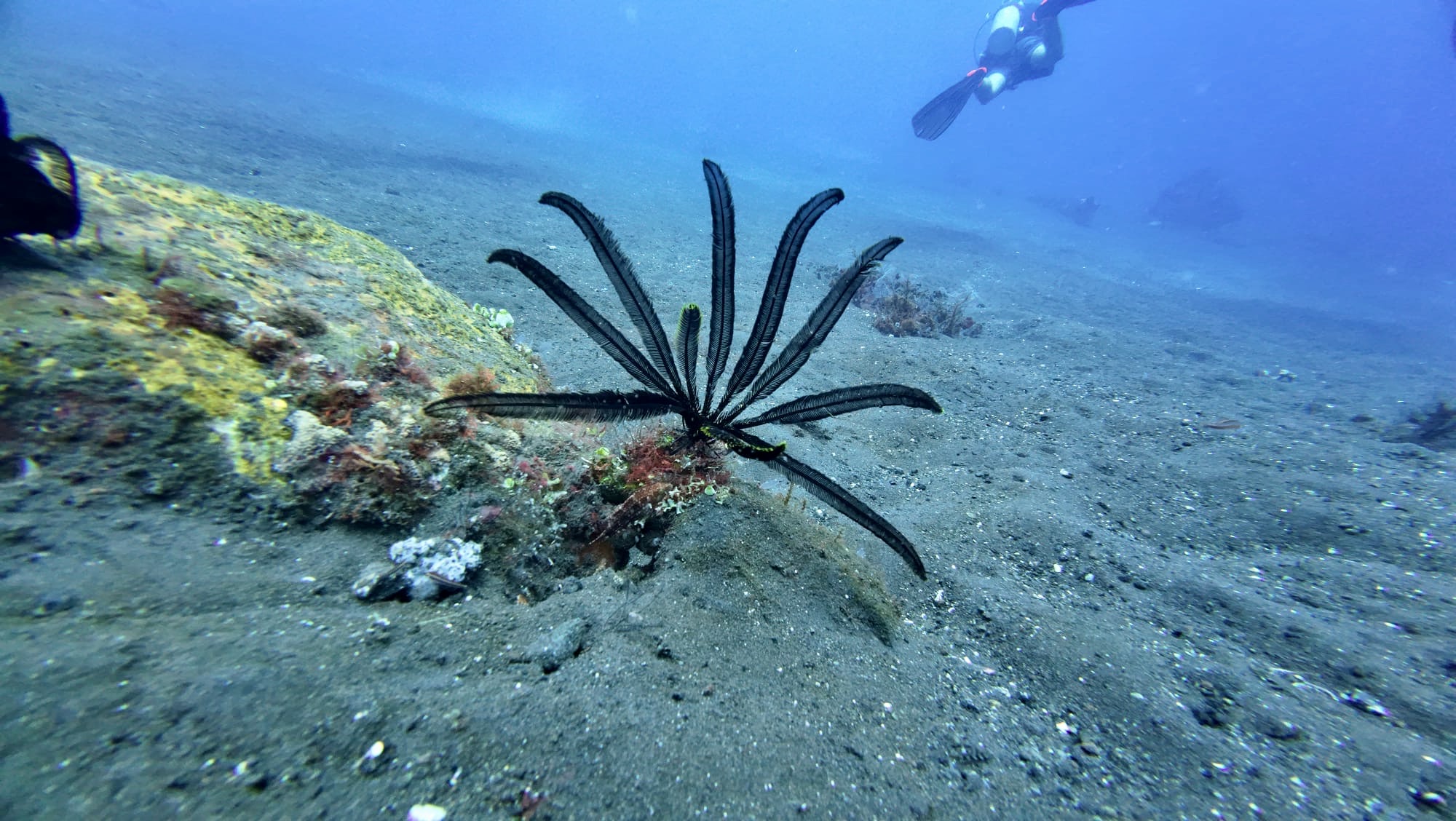
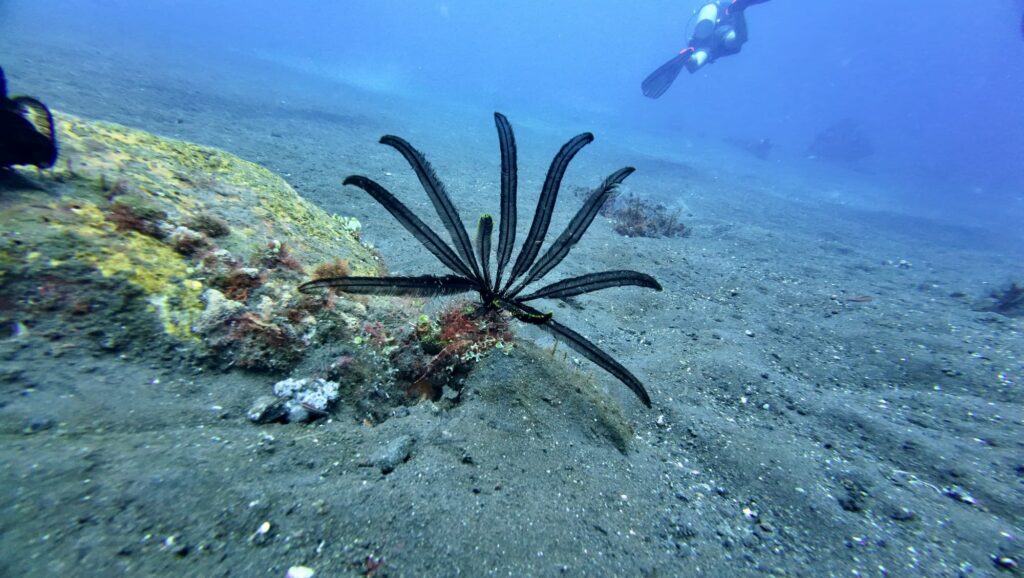 La seconde plongée est consacrée aux observations
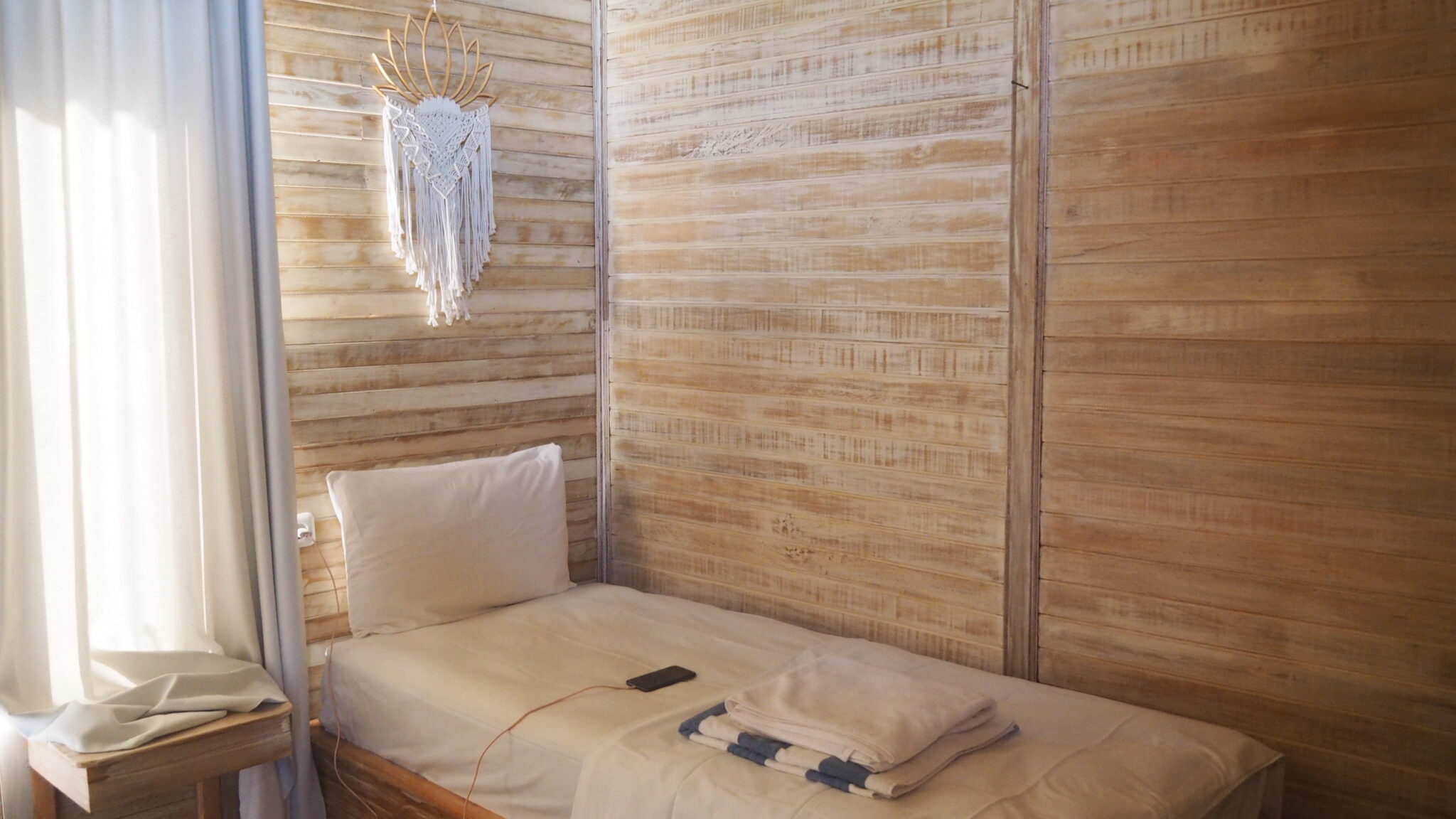
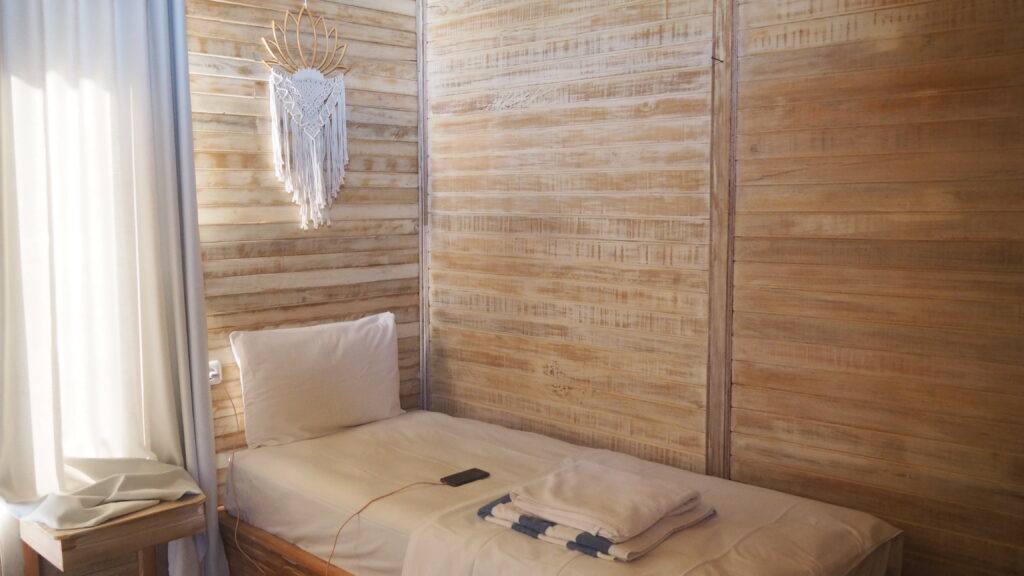 Chambre avec deux lits simples
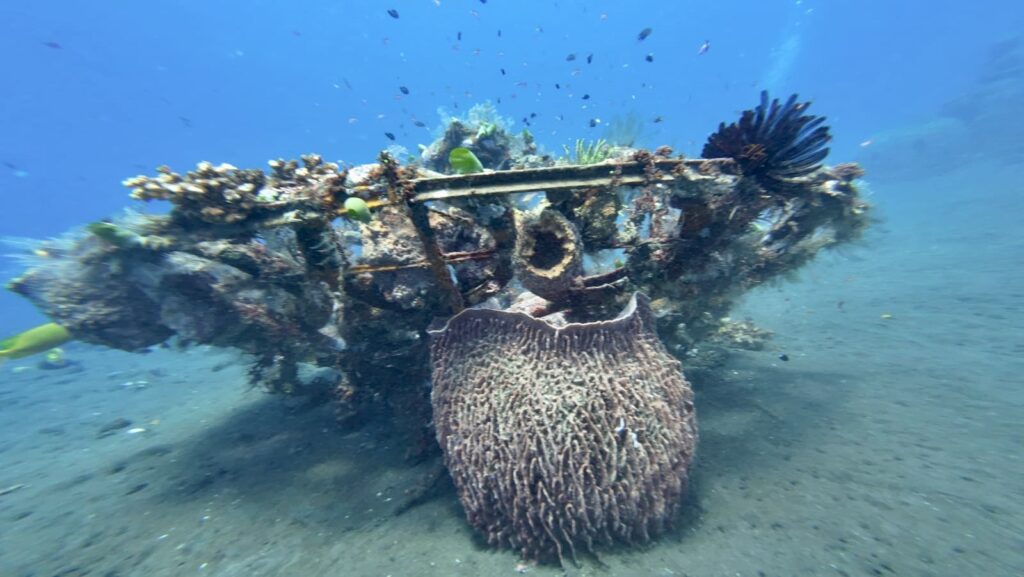 Restauration des récifs corallien en plongée à Bali
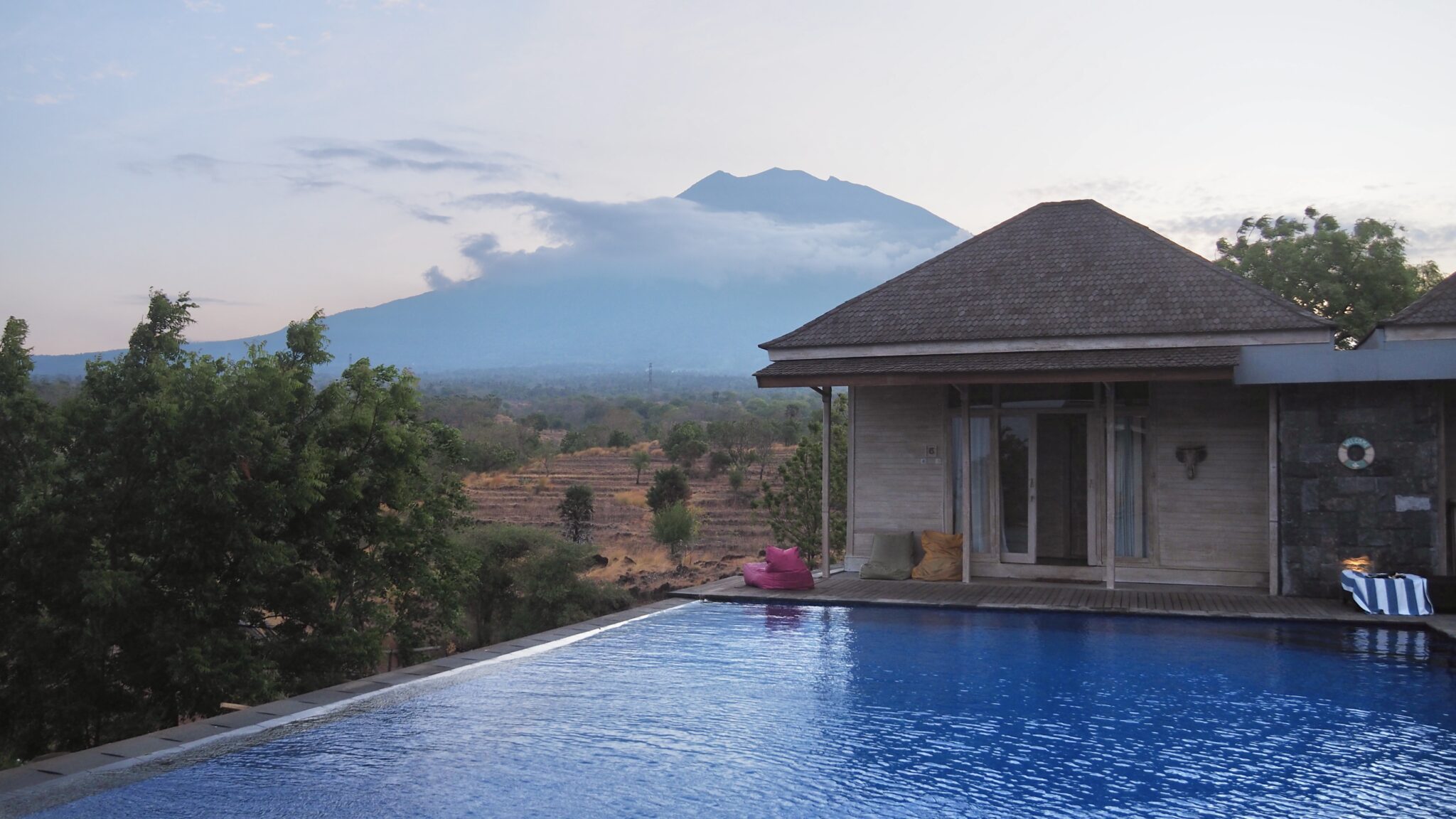
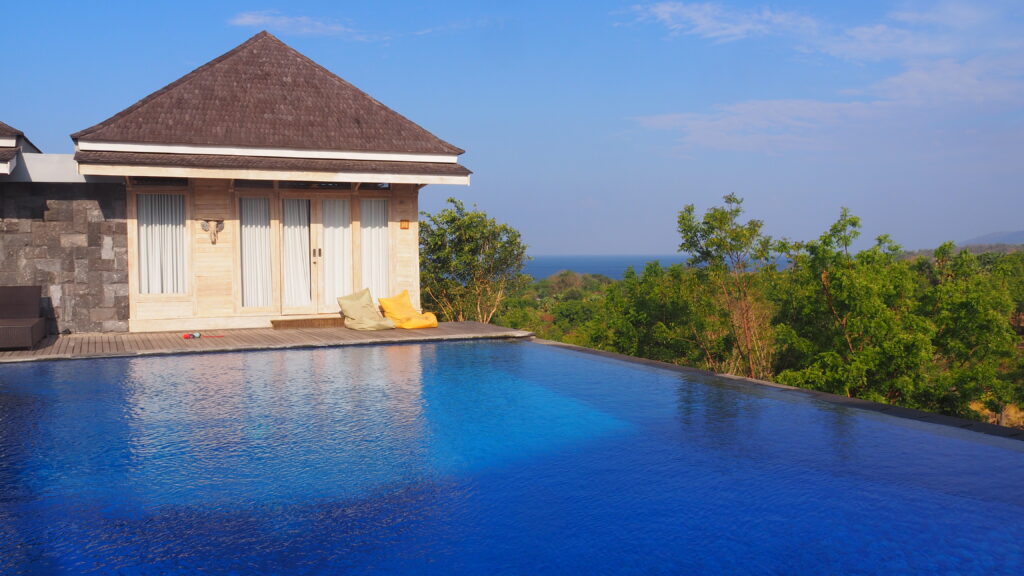 La piscine vous attend en fin de journée !
Coral Reef Restoration Diving in Bali. Join a scuba diving program specializing in coral restoration in Indonesia. You will develop your skills in coral restoration and make the most of your days off to explore Bali! All stays in Indonesia
Coral Reef Restoration
Our partner Bali Conservation Diving is a dive center located in Tulamben, in northeast Bali. It offers coral reef restoration programs, PADI diving courses, and guided dives around the island. The conservation projects are carried out with local communities who build and deploy artificial reefs in areas where coral has disappeared. Artificial reefs allow coral larvae to settle and grow naturally in sandy areas where they otherwise could not. They are also designed to incorporate complex fish habitats and can rapidly transform a barren ocean floor into an ecosystem rich in biodiversity.
The role of divers is essential
Divers are essential to this reef restoration project. They dive several times a week at four restoration sites to deploy artificial reefs alongside local community members. In the morning, divers set up the artificial reef structures in a way that creates an ecosystem conducive to the return of fish. The second morning dive is dedicated to studying the coral and fish communities developing on the artificial reefs. In the afternoon, the team works on the morning’s observations to develop their coral and fish identification skills.
Installing reef structures and collecting data As divers within the restoration program, your role will be essential!
Morning program
- 8 am: breakfast
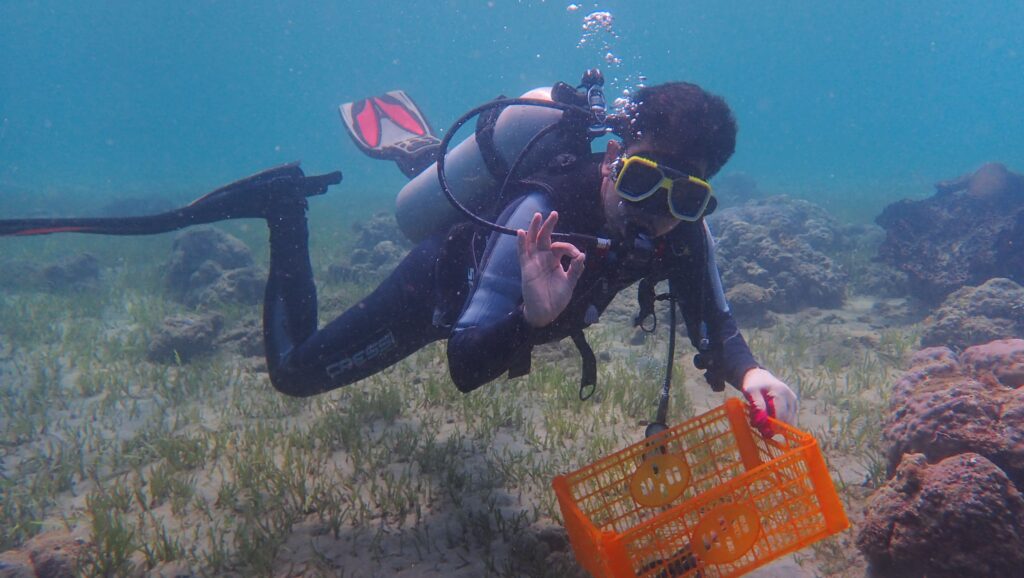
- 9 am: you head to one of the coral restoration sites. Transport is by truck and takes between 5 and 20 minutes. Upon arrival, you get ready for a dive to deploy the artificial reef structures. For this first dive of the day, divers work in pairs to optimally position the structures so they can be colonized by various organisms. Divers descend together before swimming to the deployment site. There, they remove their fins and work as a team to carry a structure.
- After a short break, you will carry out a second dive to observe and record data on fish and coral reefs. It is also possible to contribute to the assessment of coral communities by using underwater quadrats to photograph them. Coral communities develop on the artificial reef. The goal is to assess the percentage of coral coverage, biodiversity, and colony size.
- 12 pm – 1 pm: lunch at the hotel in Tulamben
- The afternoon is dedicated to data processing and identification workshops. You work together to develop your coral and fish identification skills.
- After data processing, everyone has time to relax by the pool before dinner
- 6 pm: dinner
Weekly schedule The week starts on Friday morning and ends on Monday afternoon. Tuesdays, Wednesdays, and Thursdays are free to travel and explore Bali at your leisure before resuming on Friday.
Dates
- Between 1 and 8 weeks, year-round
- Program starts on Friday. It is recommended to arrive on Thursday afternoon
Pricing
- 1 week: $854 (approx. €810)
- 2 weeks: $1,342 (approx. €1,273)
- 3 weeks: $1,829 (approx. €1,734)
- 4 weeks: $2,195 (approx. €2,081)
- 5 weeks: $2,561 (approx. €2,429)
- 6 weeks: $2,927 (approx. €2,776)
- 7 weeks: $3,293 (approx. €3,123)
- 8 weeks: $3,659 (approx. €3,471)
Prices in euros may vary depending on the exchange rate
Included in the price
- 8 dives per week
- Accommodation
- Meals
- Airport or accommodation transfer
- Internet
Not included in the price
- Flights
- Visa
- Travel insurance
- Travel outside the program
- From 16 years old
- Families welcome with children from 10 years old
- Language: basic English
- Diving certification: must hold at least a PADI Open Water Diver certification or equivalent. Non-divers can obtain their PADI Open Water Diver certification for an additional fee.
- Minimum stay: 1 week
- Maximum stay: 8 weeks
Arrival Our partner will pick you up on Thursday from anywhere on the island of Bali. If your flight arrives on Thursday, they can also arrange to collect you directly from the airport. For those whose flights land before Thursday, you can take the opportunity to travel around southern Bali before our partner picks you up on Thursday.
Accommodation Your accommodation is located at the dive center in Tulamben, where you can enjoy watching the sunrise over the ocean in the morning and breathtaking sunsets behind the Agung volcano in the evening. Rooms have a maximum capacity of two people. Most rooms are unisex twin rooms with two single beds, although there are a few private rooms with double beds for couples traveling together. All rooms have shared bathrooms and ceiling fans for your comfort. Our partner also has a private pool and a bar that you can use during your free time.
Food Local cooks prepare breakfast, lunch, and dinner from Thursday evening through Tuesday lunchtime. Meals can be prepared on days off for an additional charge. Please inform the partner of any dietary requirements and remind the cooks upon your arrival. The meals are prepared using produce from local markets to ensure the freshest ingredients. Each meal is served buffet-style, with various options available. Breakfast: toast, eggs, pancakes, fried bananas, fresh seasonal fruit. Lunch and dinner: steamed rice or fried rice, fried noodles, fresh garden salad, pasta, chicken, fish, tofu, tempeh, eggs, sautéed potatoes and seasonal vegetables, accompanied by spicy sambal and fried crackers.
- Up to 8 dives per week, deploying artificial reef structures across four different sites to help restore damaged coral reefs in Bali.
- Improve your coral and fish identification skills by taking part in our monitoring dives before adding the data you have collected to our database.
- See the results of the restoration program for yourself by diving on the artificial reefs and encountering the new fish and coral communities that have re-established there.
- Explore everything Bali has to offer through short excursions in the Karangasem region and longer trips to the island’s best sites or surrounding islands during your days off.
- Relax at the dive center in Tulamben, where you can enjoy watching the sunrise over the ocean in the morning and breathtaking sunsets behind the Agung volcano in the evening.
Tuesdays, Wednesdays, and Thursdays are free. This is your chance to explore the region or simply relax by the pool! The nearest beach and snorkeling spot are just a 5-minute walk away. The famous USAT Liberty Shipwreck dive site in Tulamben is also just a 5-minute drive or 30-minute walk away.
You can organize short excursions:
- A sunrise boat trip with local fishermen (These early morning excursions are organized by local fishermen and, while you are guaranteed an exceptional sunrise, you may also be lucky enough to spot dolphins)
- An evening at Sunset Point in Amed. The relaxed atmosphere truly sets the mood for a wonderful evening with friends, with delicious drinks and snacks to enjoy while watching the sun set behind Mount Agung.
- Visit the Lempuyang Temple – This temple is one of the most famous photography spots on the island, and for good reason. The temple gates face outward, offering a breathtaking view of the sunset behind Mount Agung.
Discovering Bali and its surroundings
- As your days off fall on Tuesdays, Wednesdays, and Thursdays, this gives you plenty of time to explore Bali and the small surrounding islands.
- Discover Ubud, the cultural heart of Bali, where you will find the best yoga and meditation classes, as well as traditional fire dances, rice field landscapes, and much more.
- Enjoy southern Bali, the most popular tourist destination in all of Indonesia.
- Explore Nusa Penida, known for its scenic cliffs and white sandy beaches, just a short boat ride from the mainland.
- Head to the Gili Islands, a little paradise with white sandy beaches!
About the partner
Our partner is a dive center established in 2022, located in Tulamben, in northeast Bali. Its members are passionate scuba diving enthusiasts. For many years, they have been helping local communities preserve the coral reefs of their villages, encouraging them to stand up for and protect their environment. They inspire all divers to practice environmentally responsible diving. For divers who want to go further and learn coral study and restoration techniques, a coral reef restoration program was created