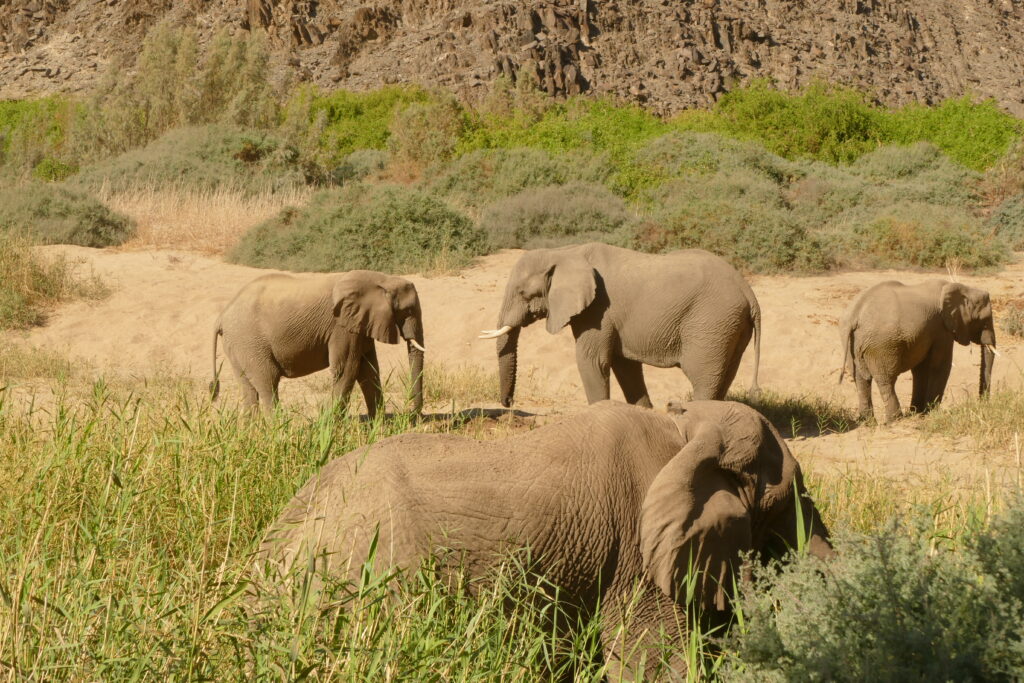
 Desert elephants in Namibia
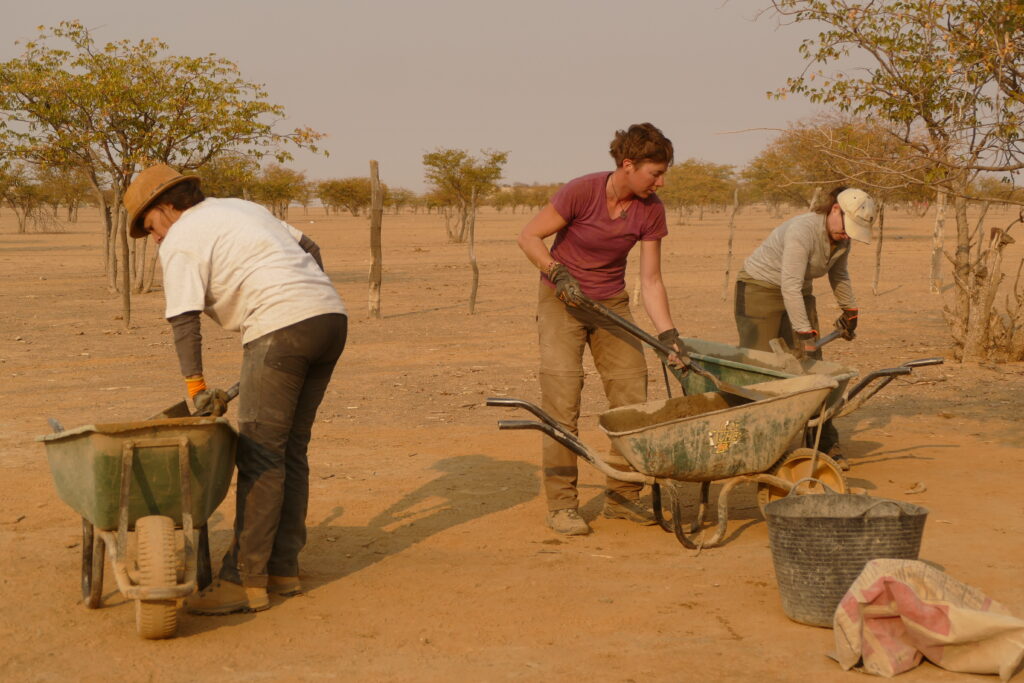 Protect desert elephants in Namibia
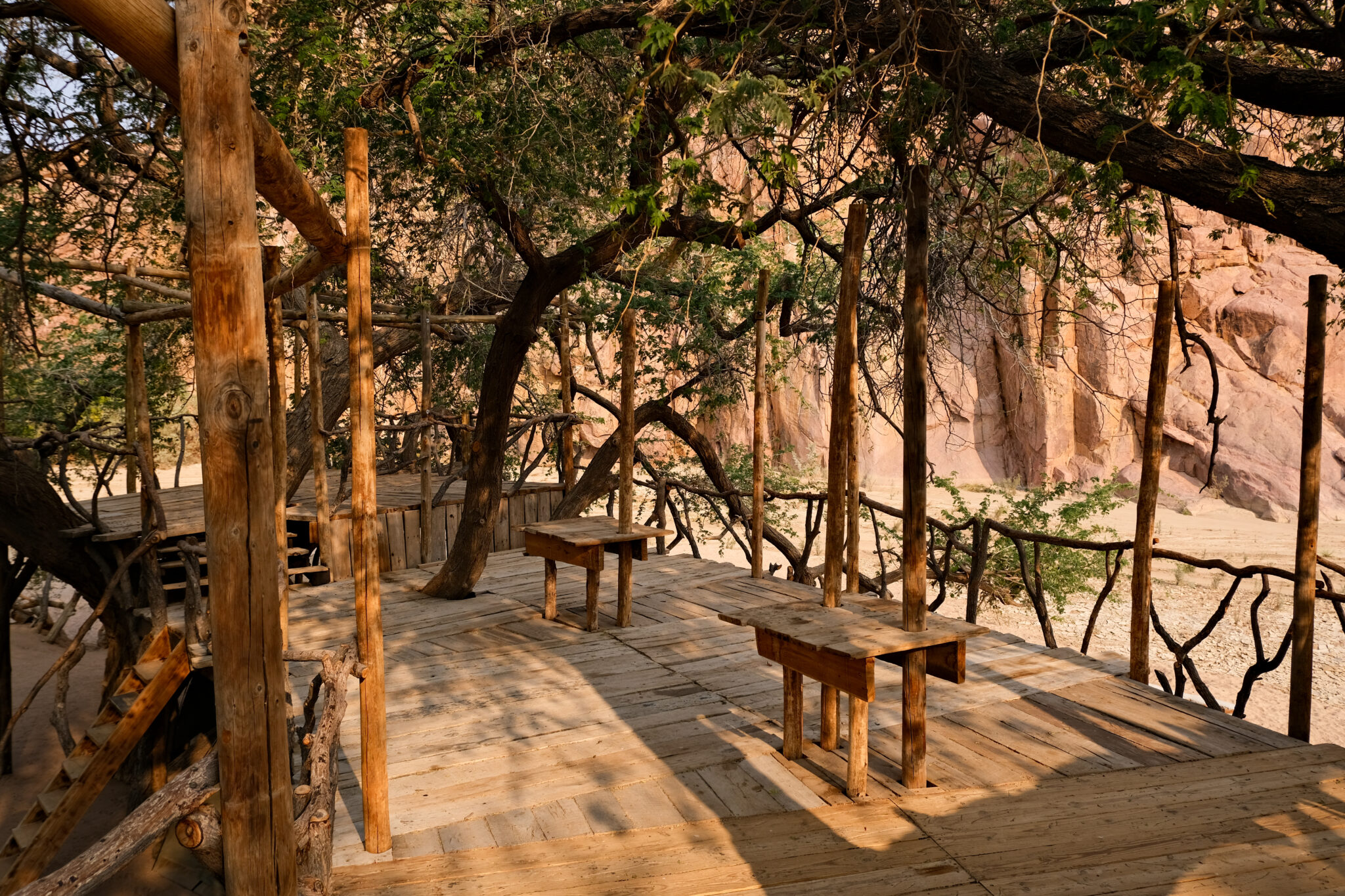
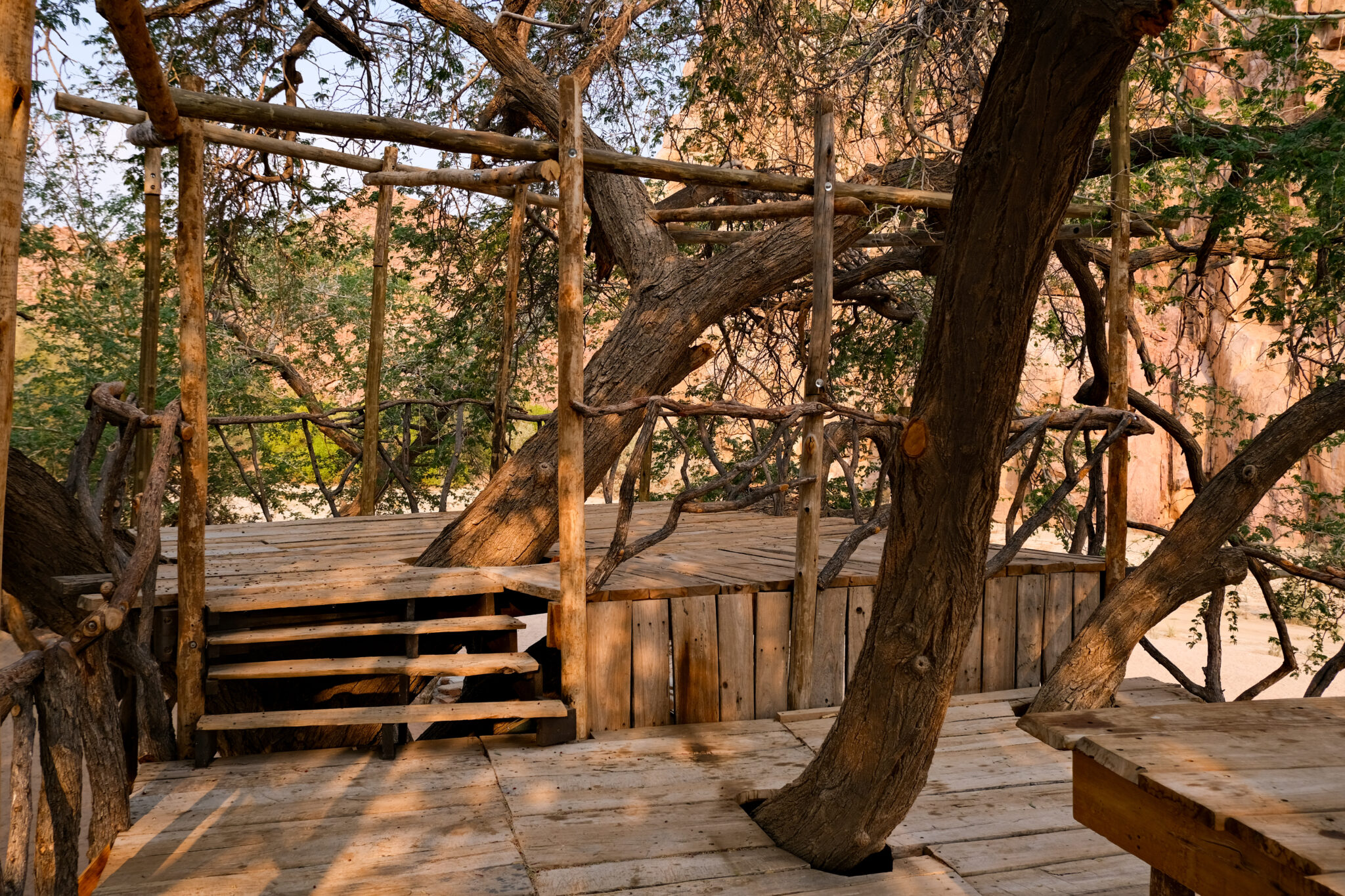
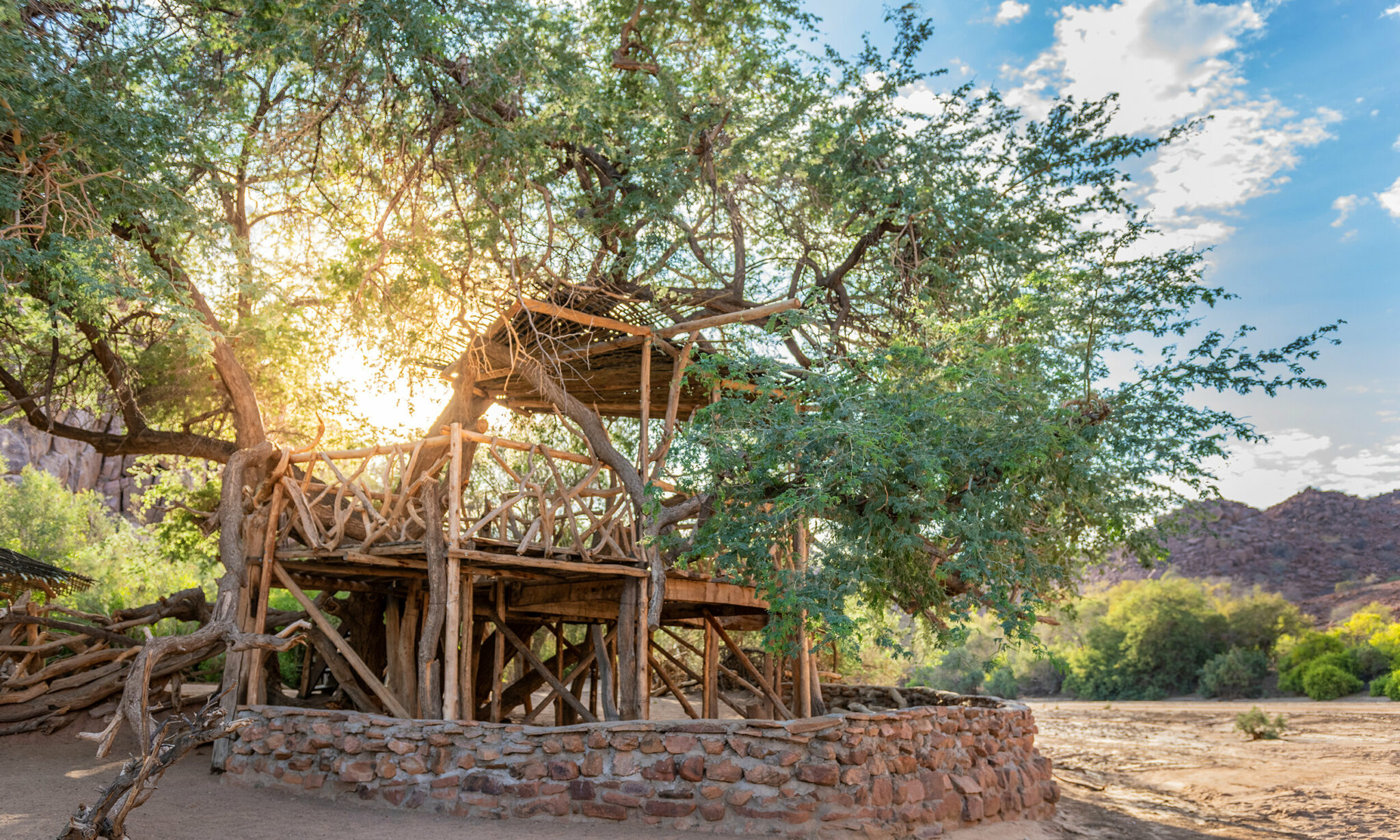
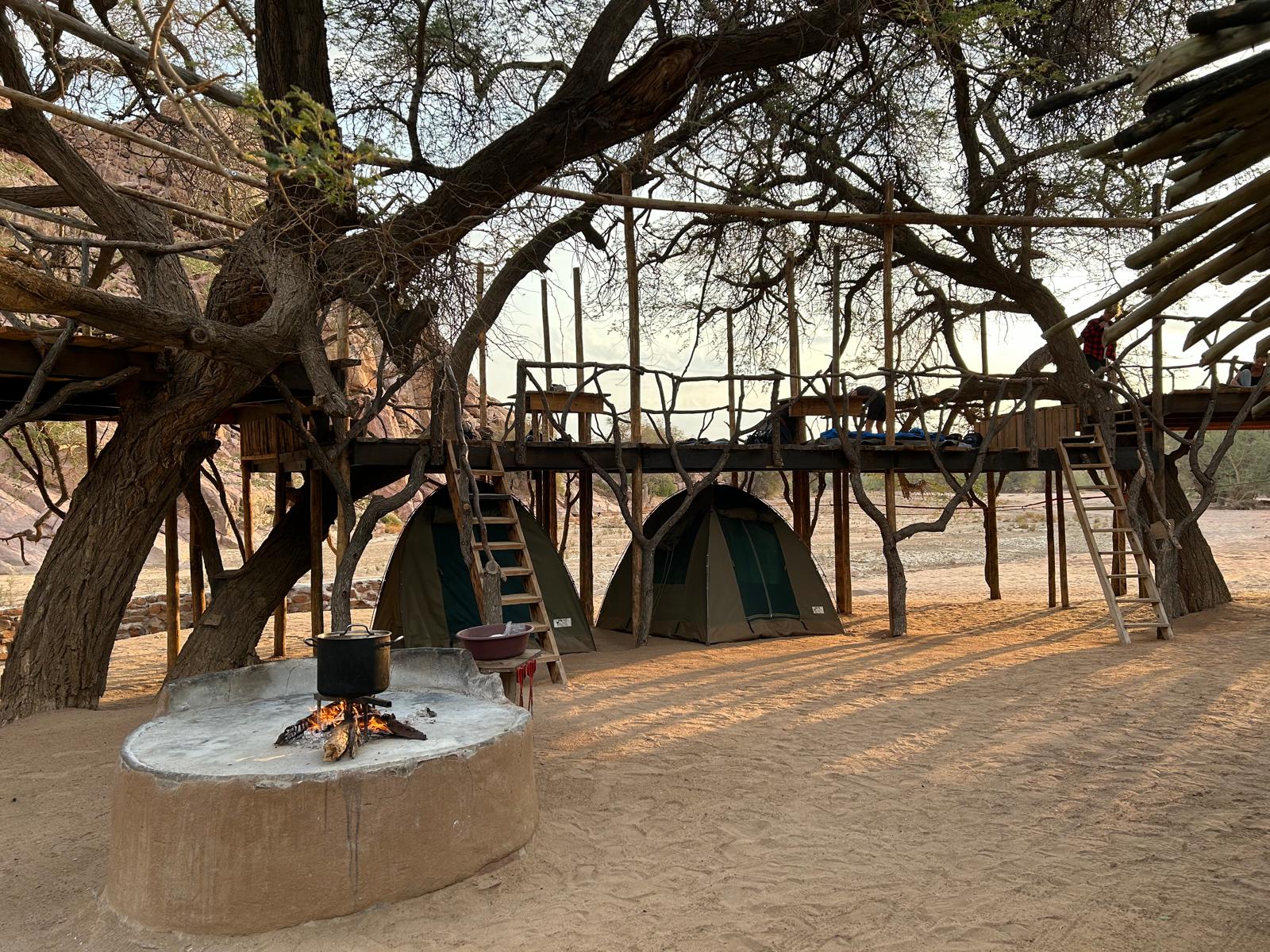
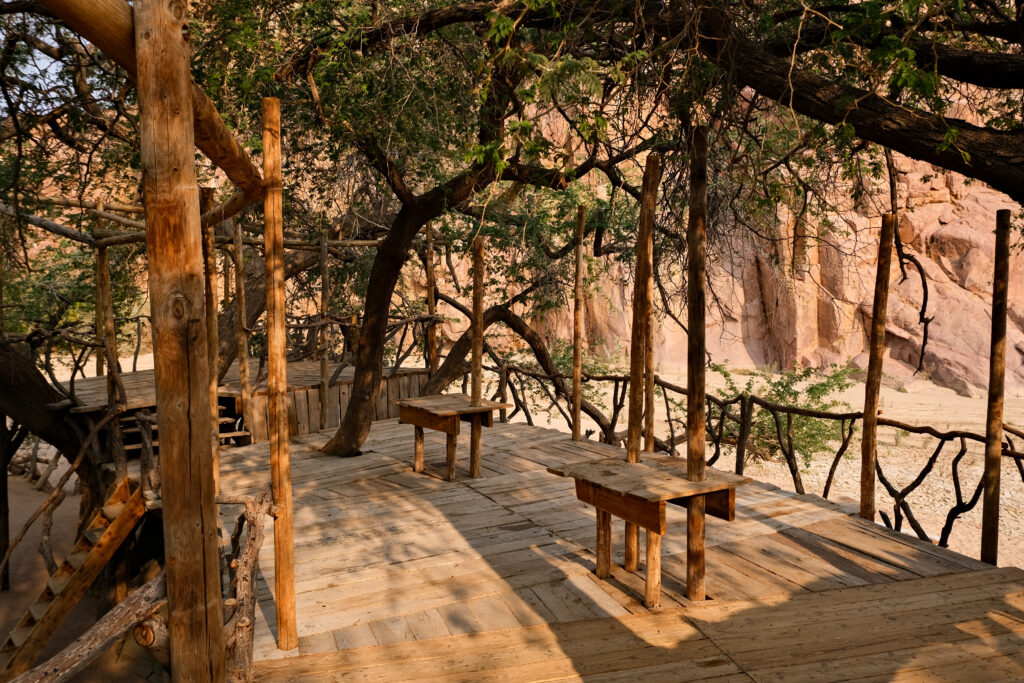 Volunteer base camp in Namibia
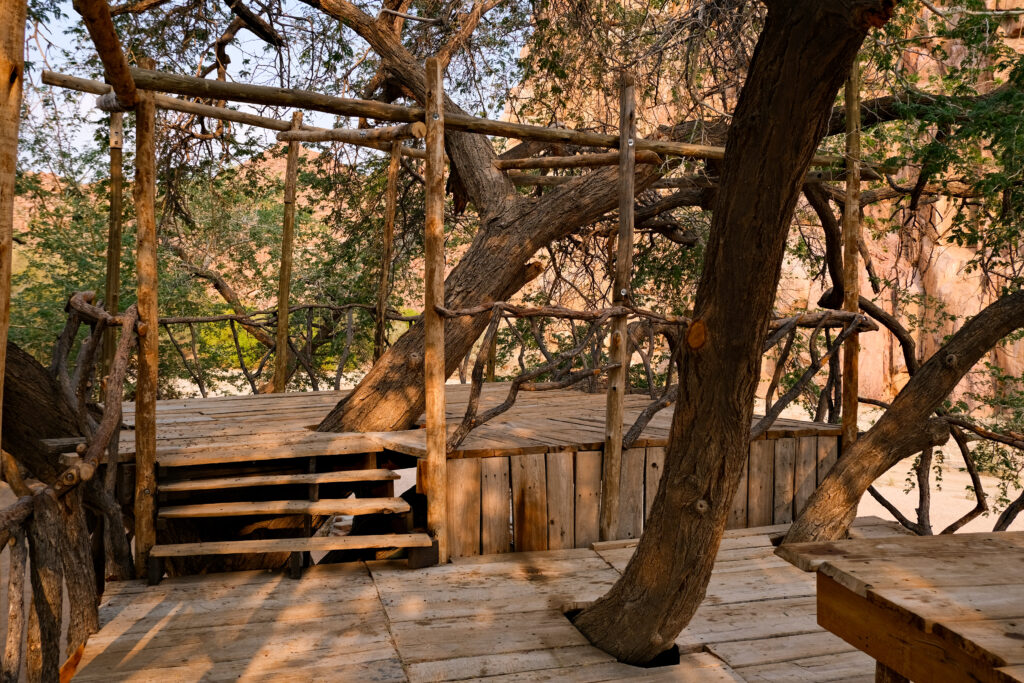 Ecovolunteers will stay at EHRA's Base Camp on the first night, last night and weekends.
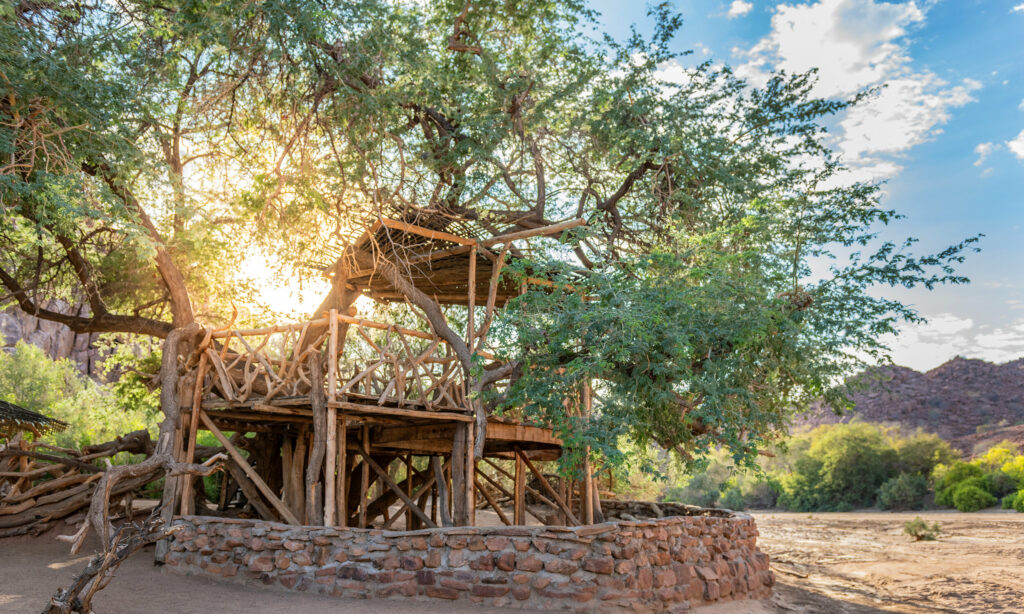 This participative and supportive trip to Namibia is open to families.
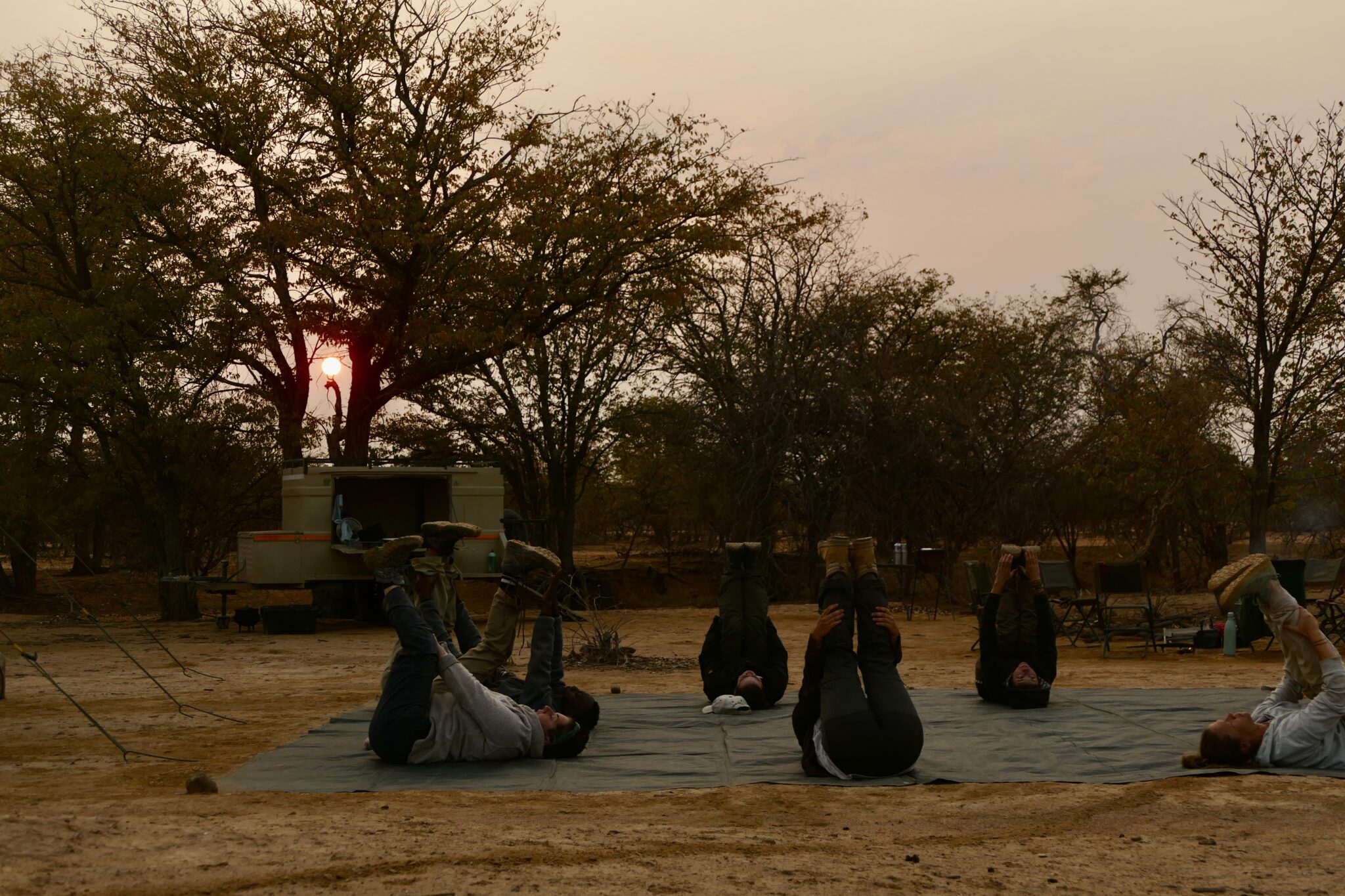
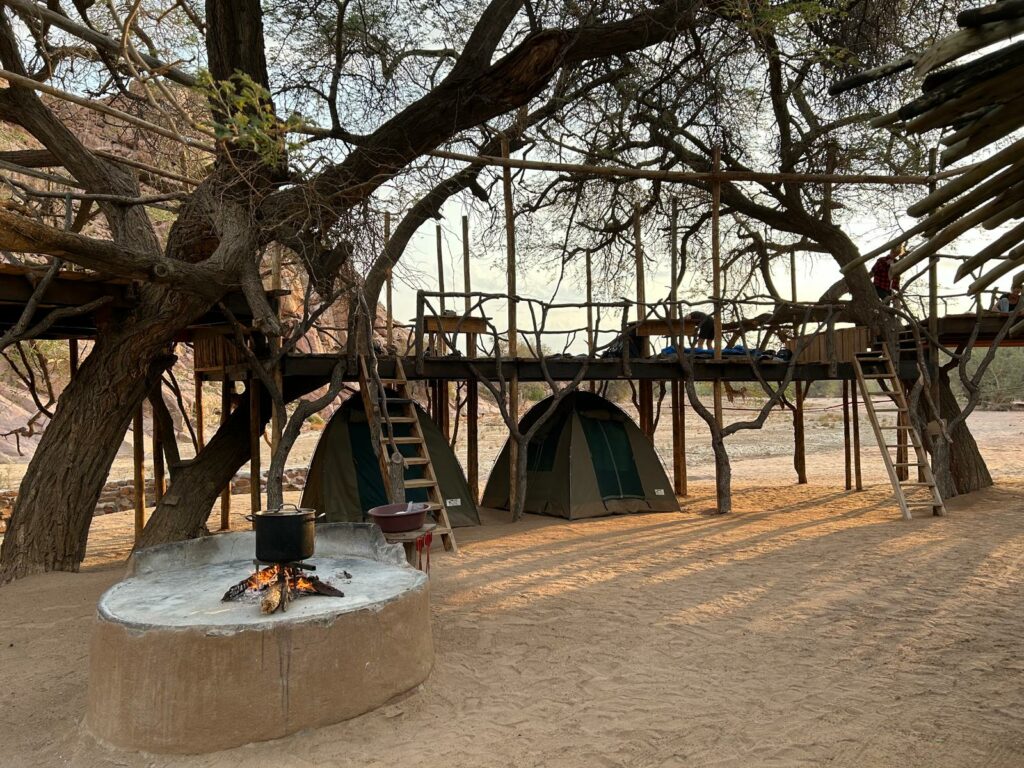 Enjoy Namibia's beautiful starry nights
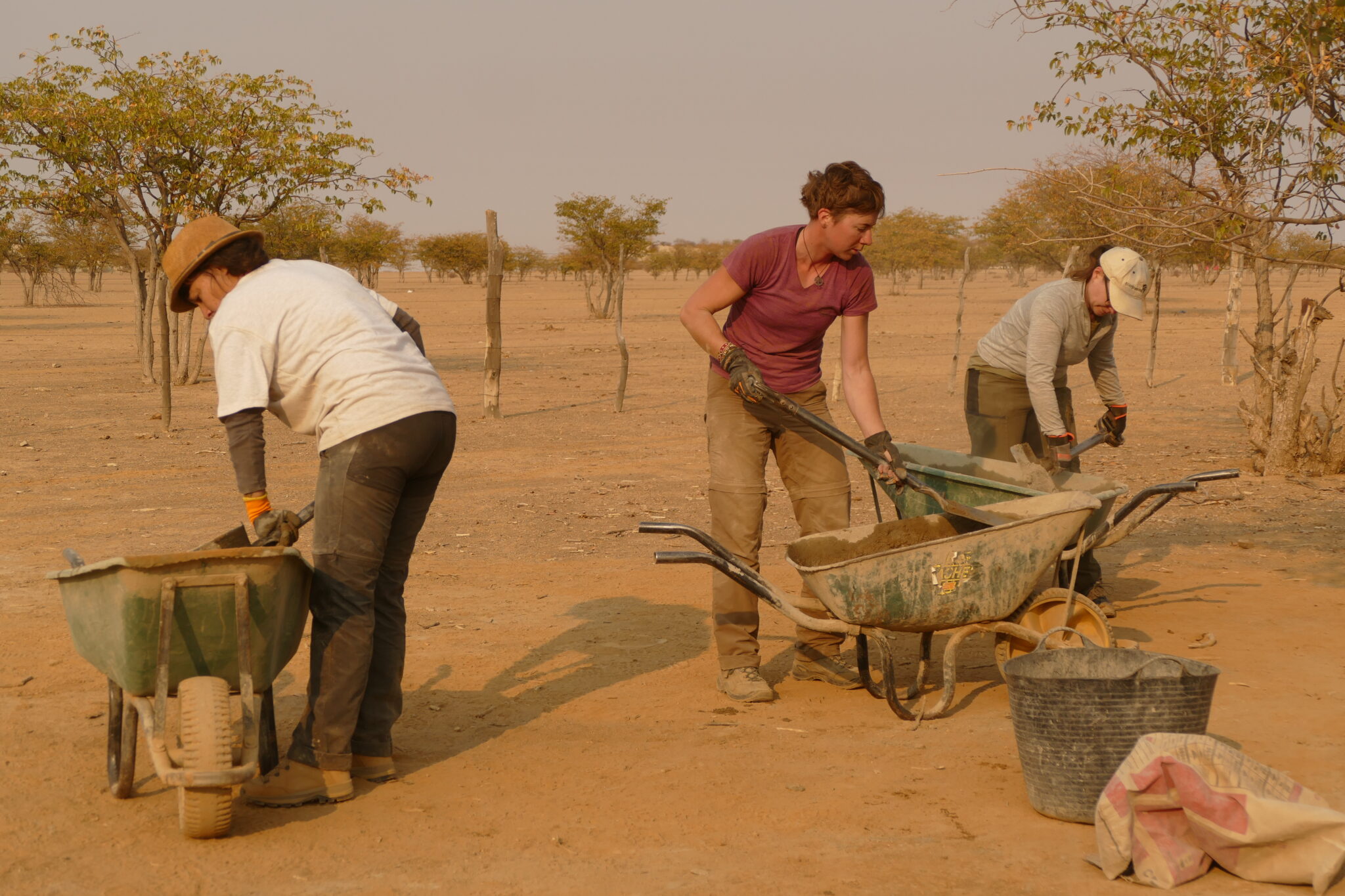
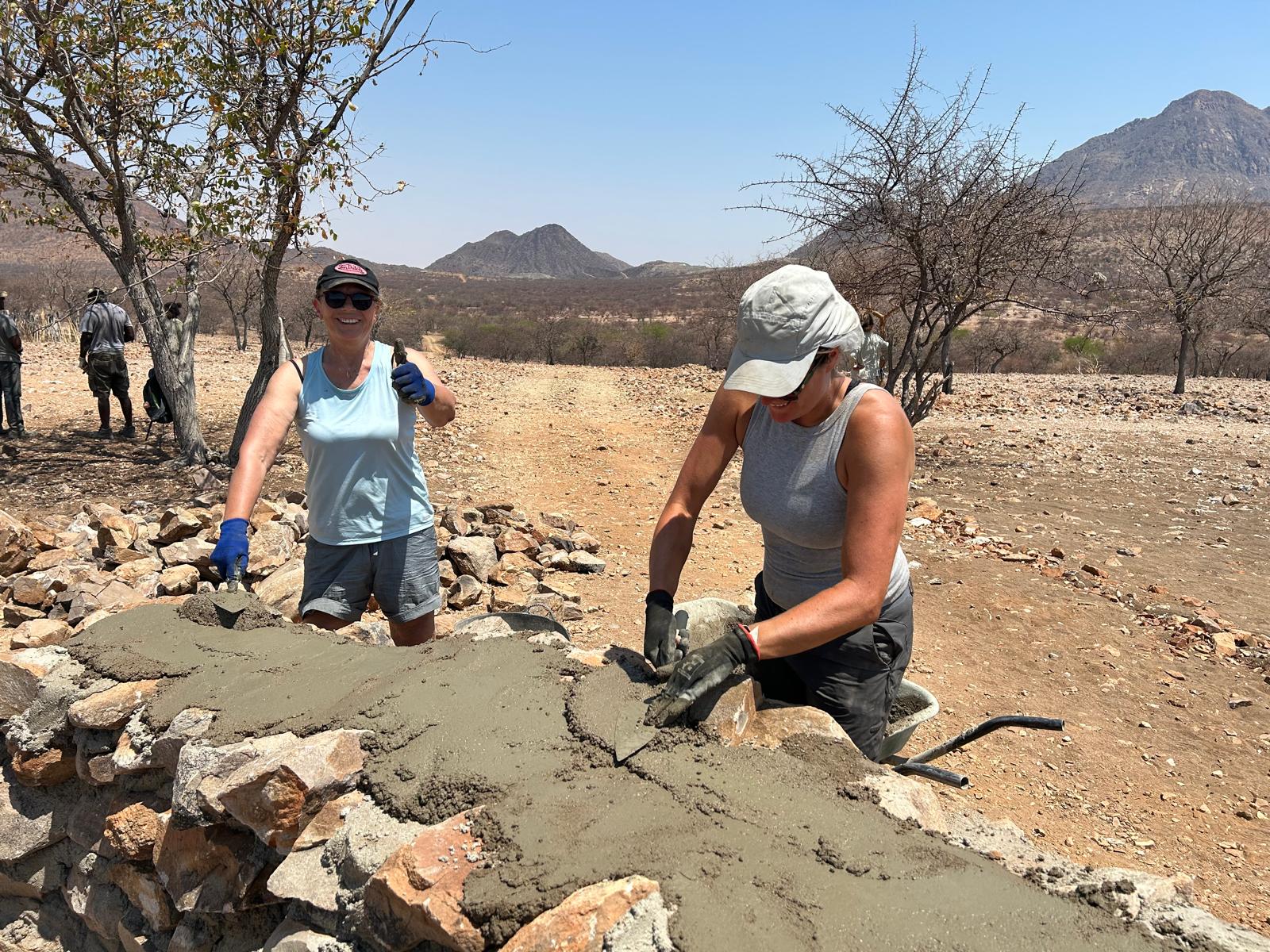
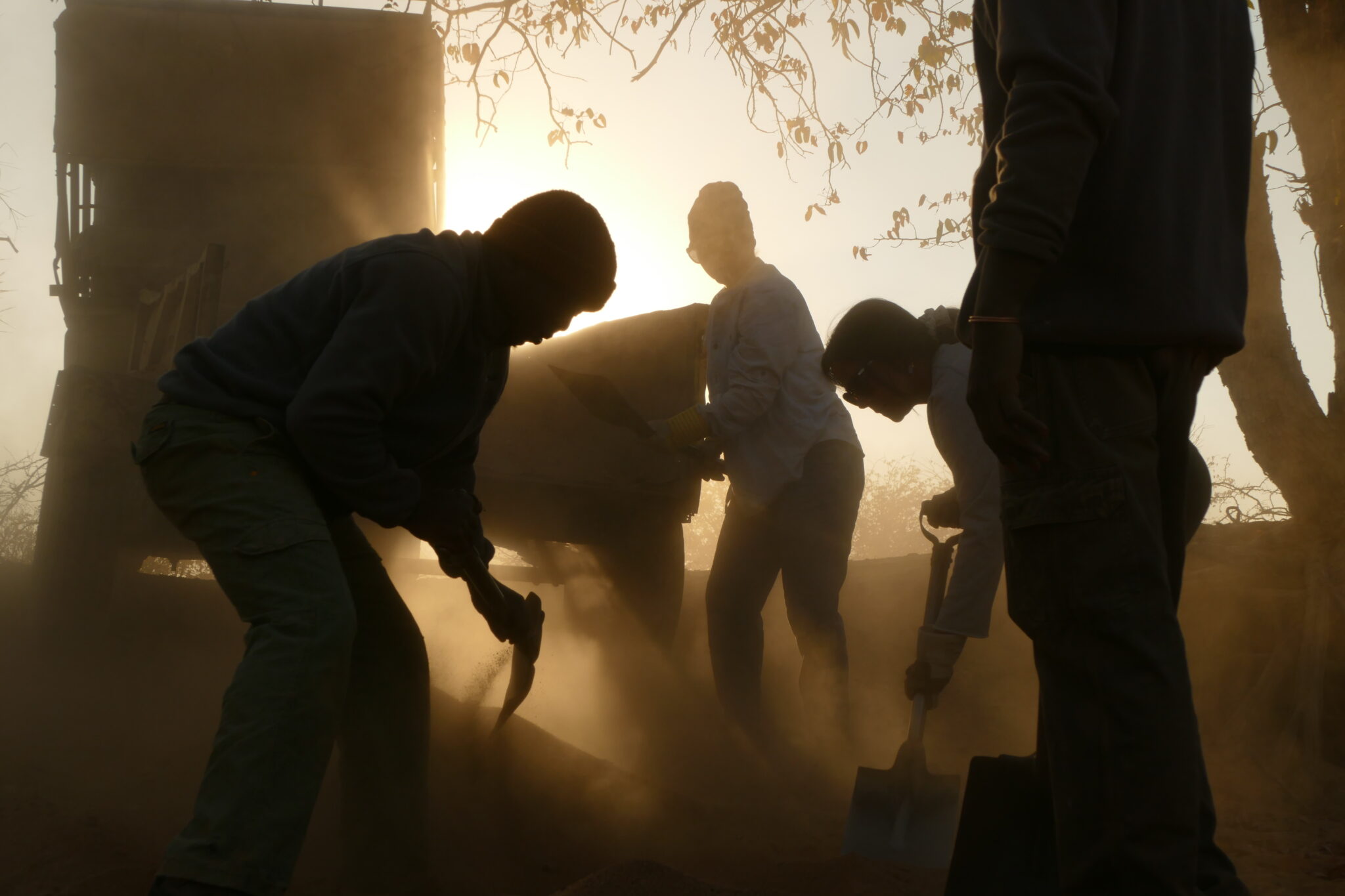
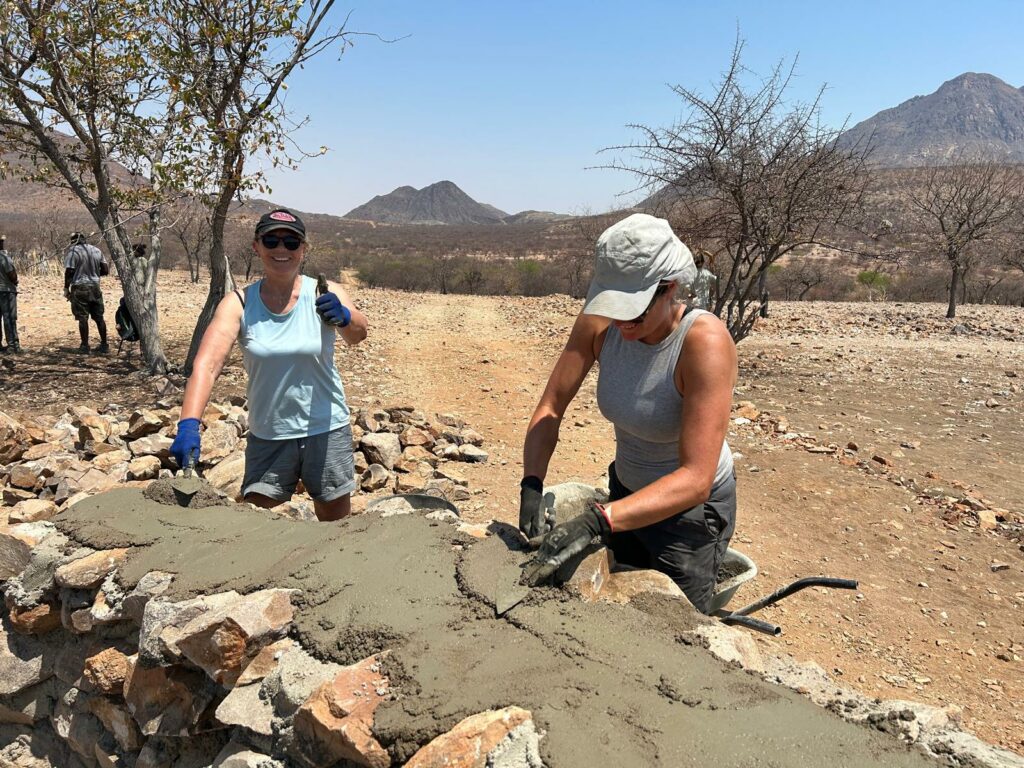 Volunteers build protective walls around wells
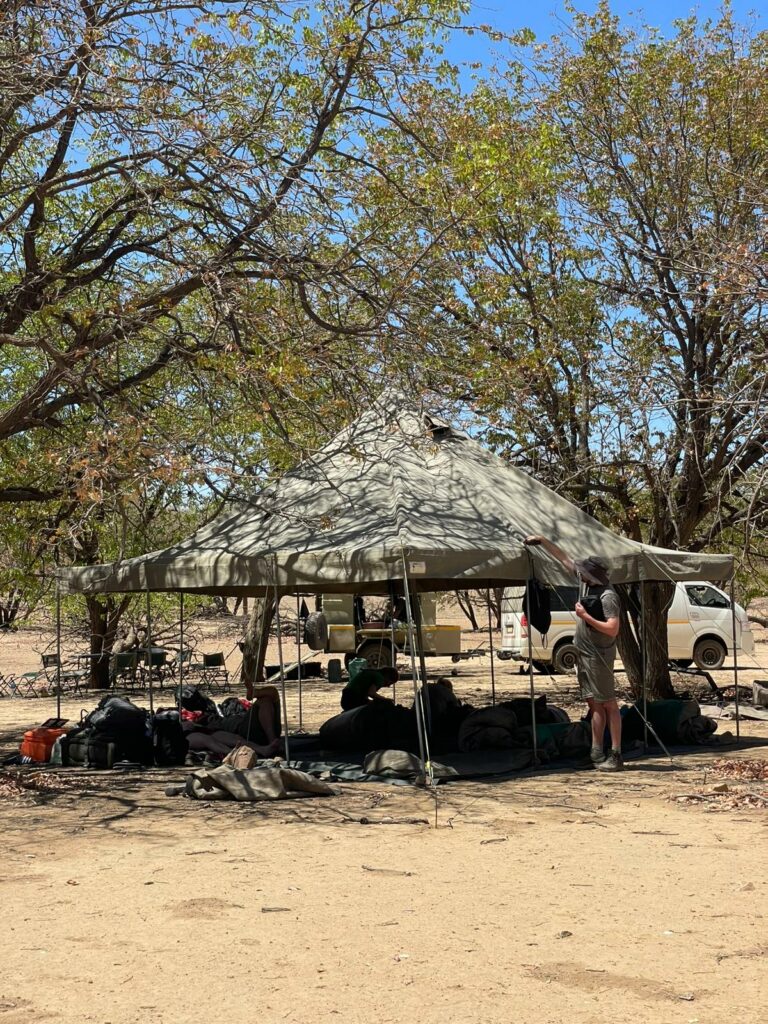 These solidarity trips are organized in 2-week rotations
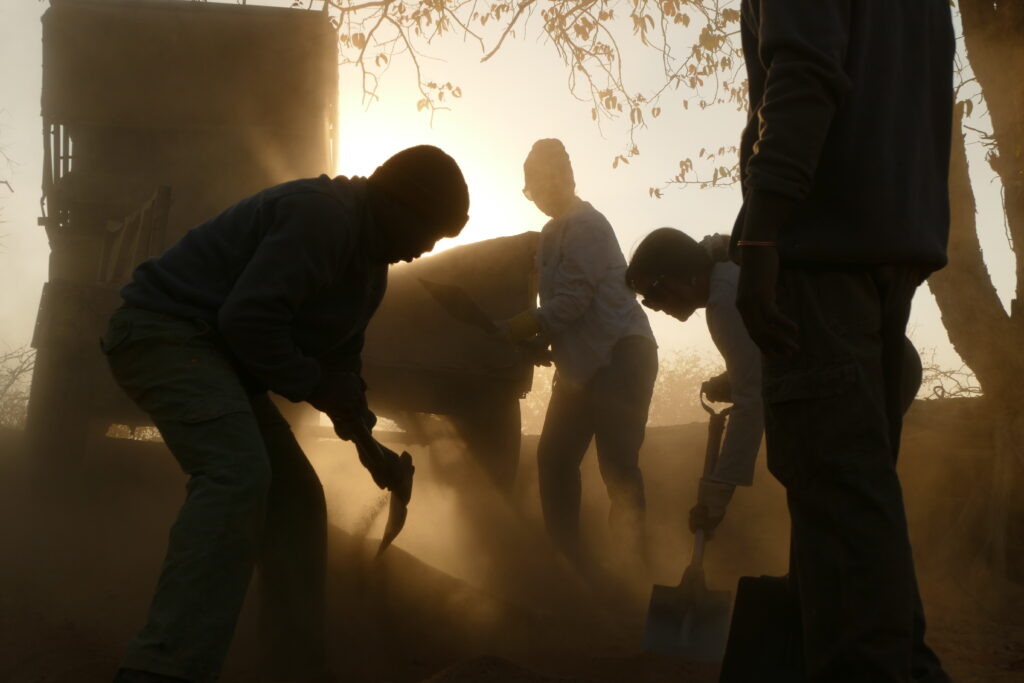 Enjoy a wonderful experience in breathtaking scenery
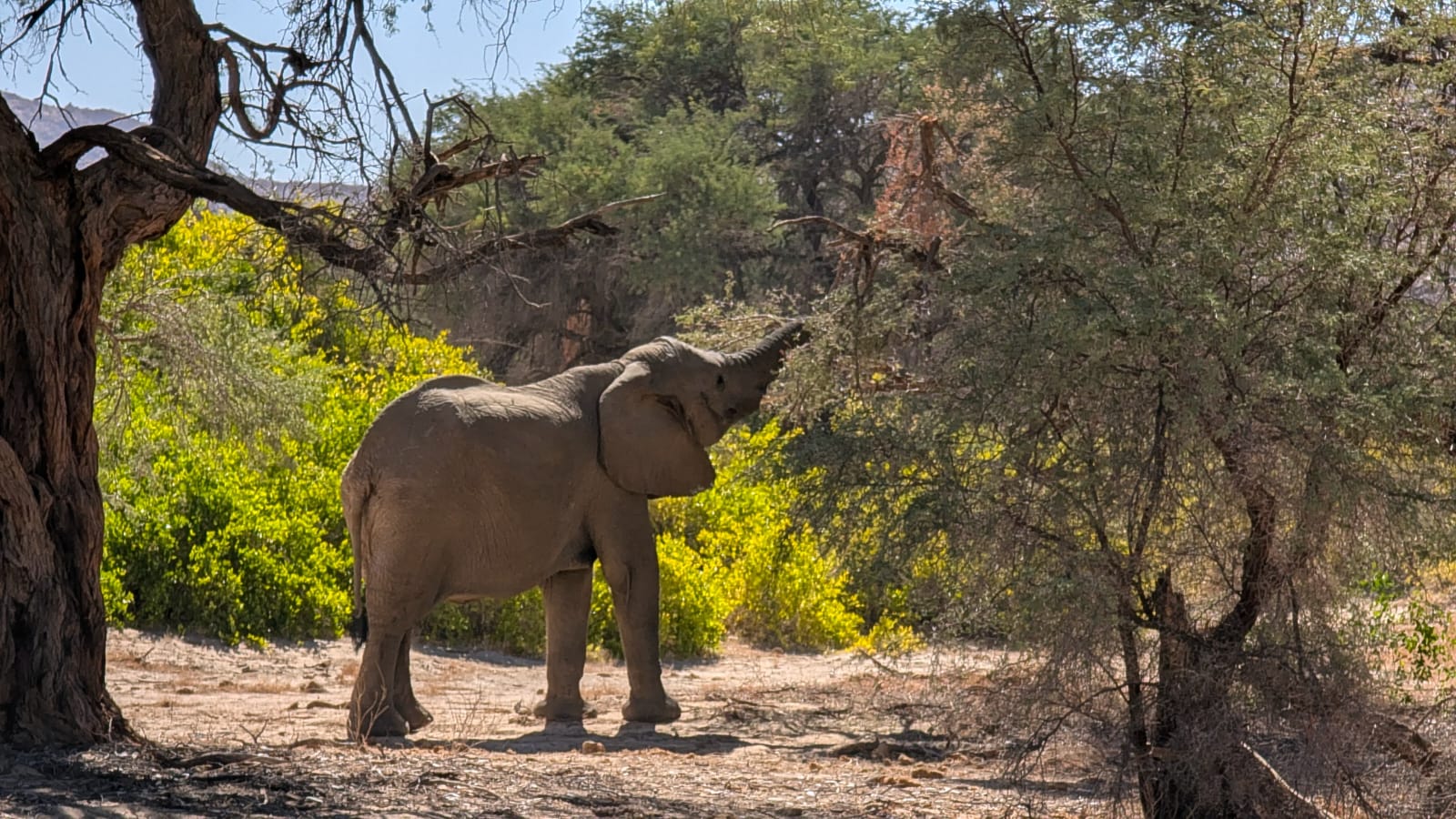
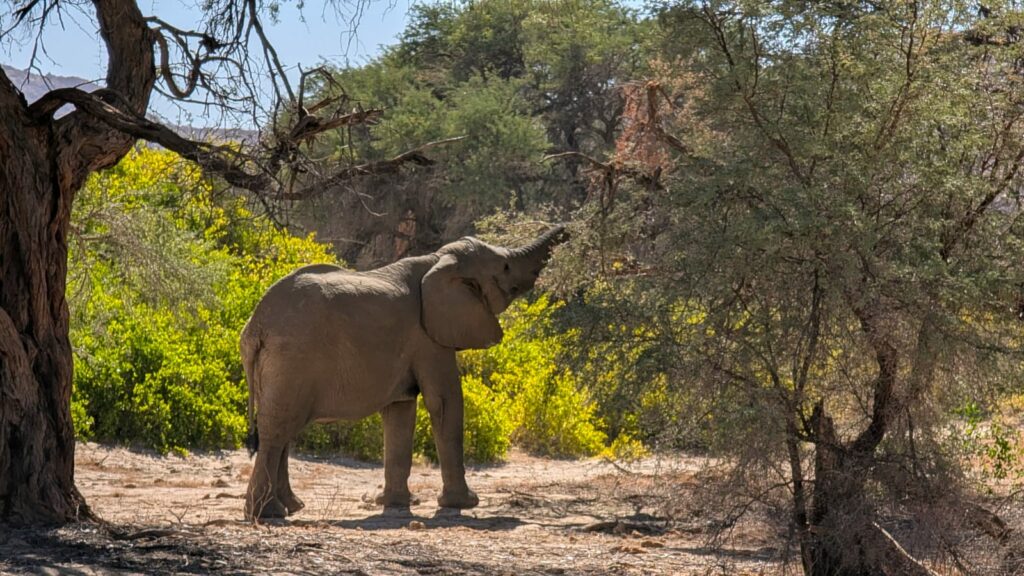 Elephants and humans compete for water supplies in parts of Namibia
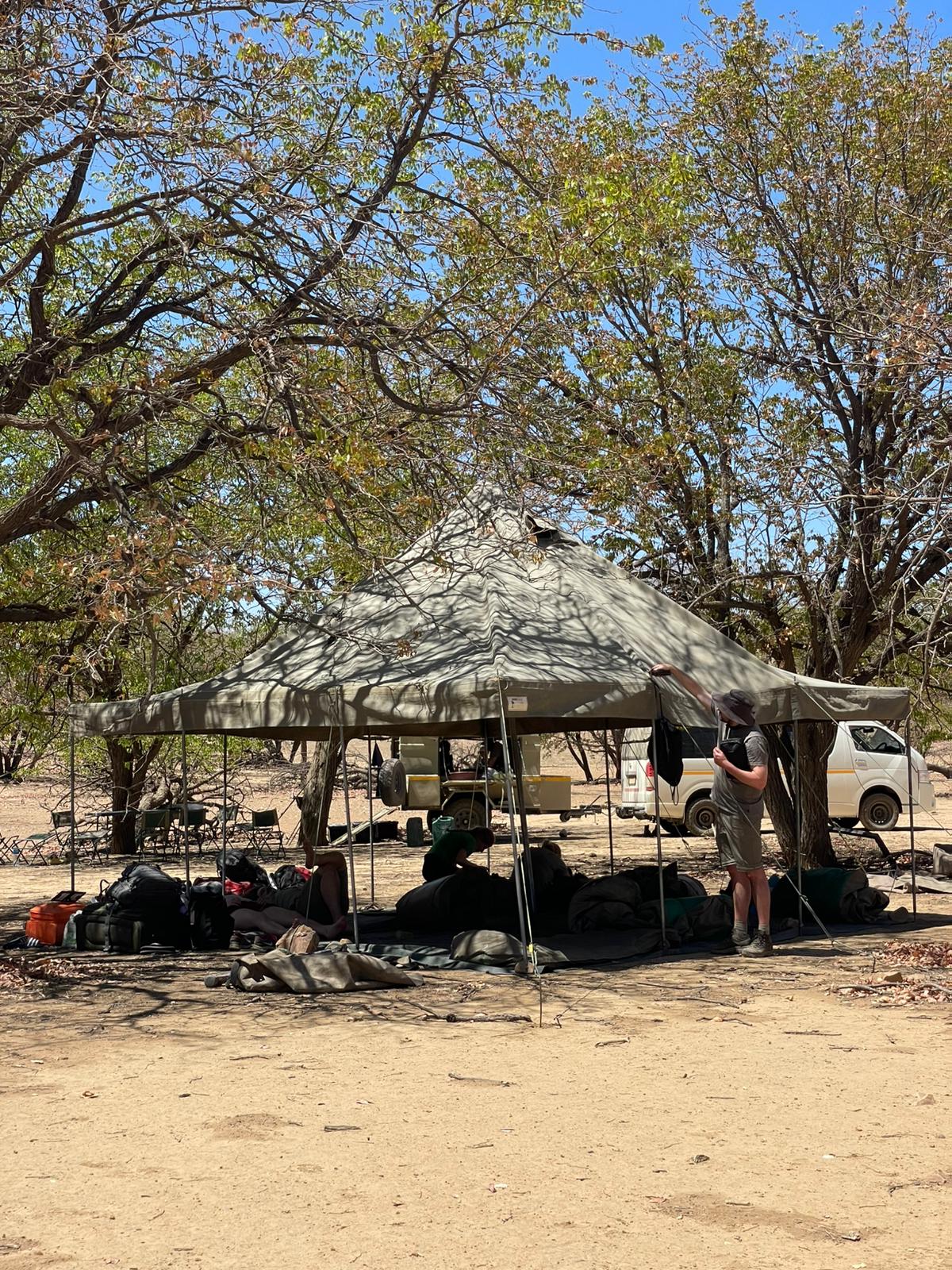
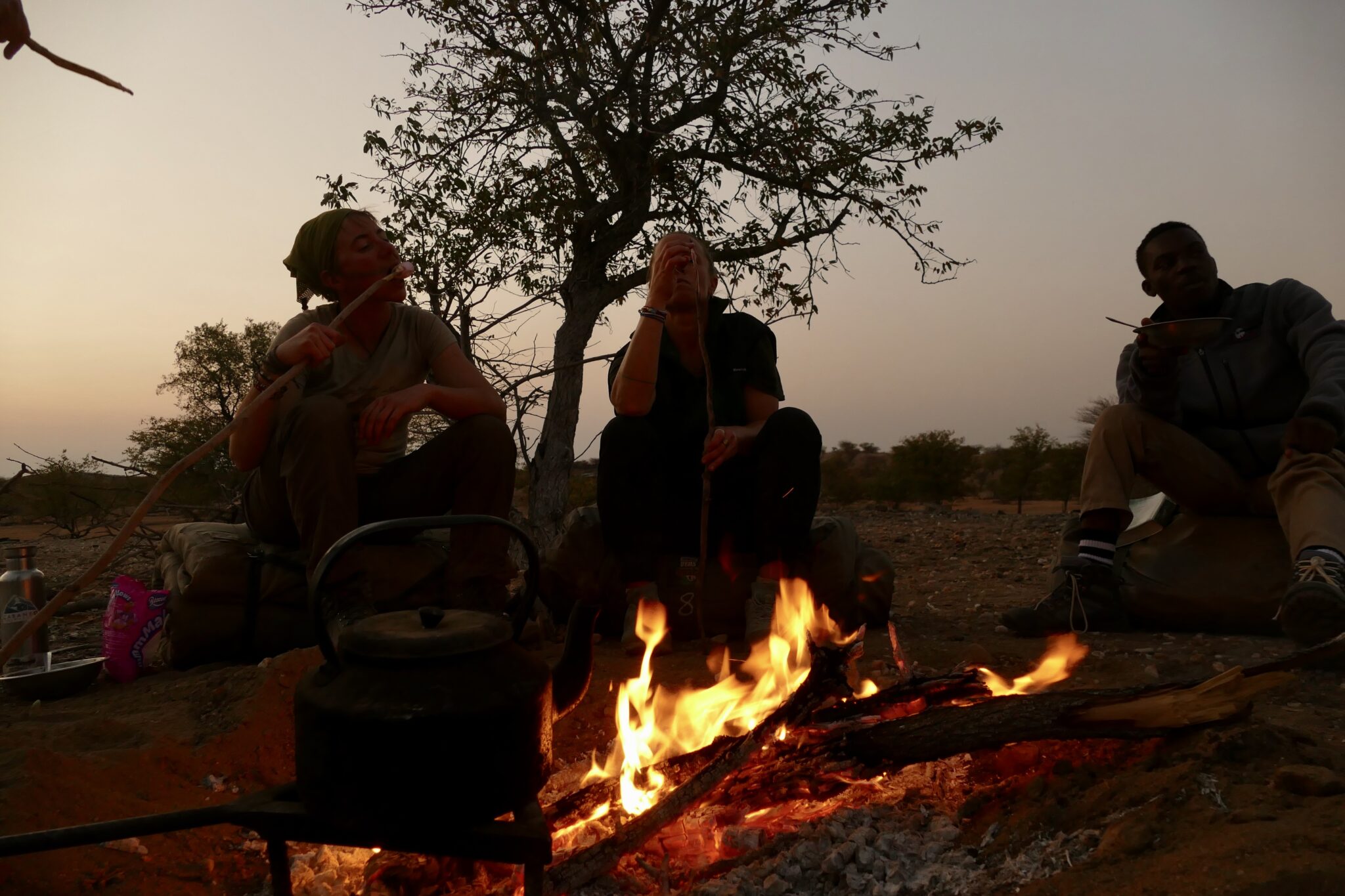
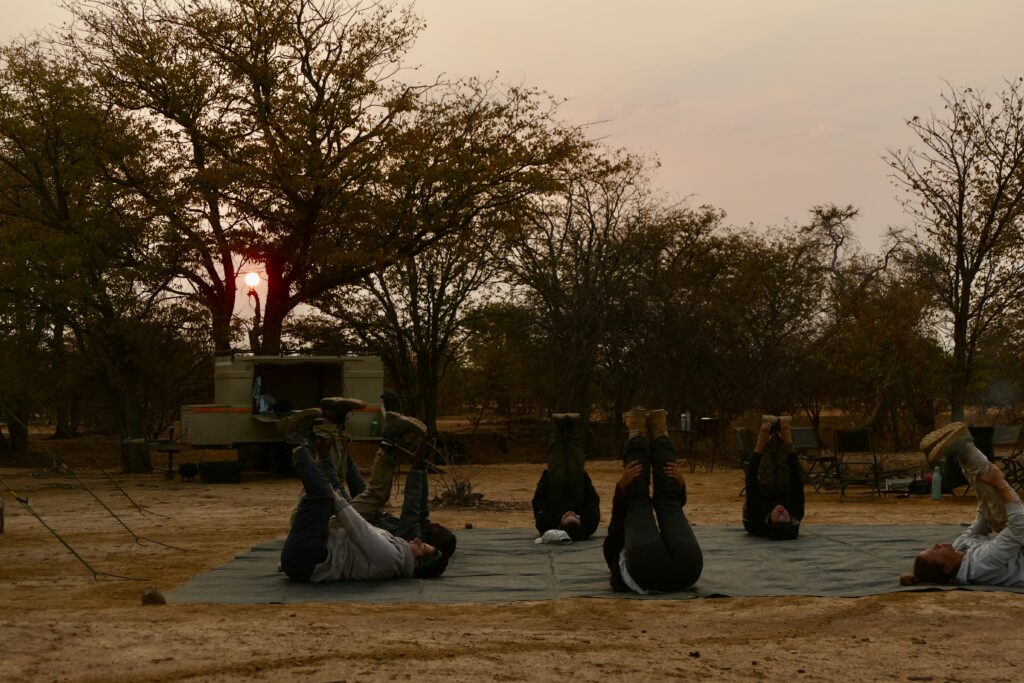 Wild camping evenings in Namibia
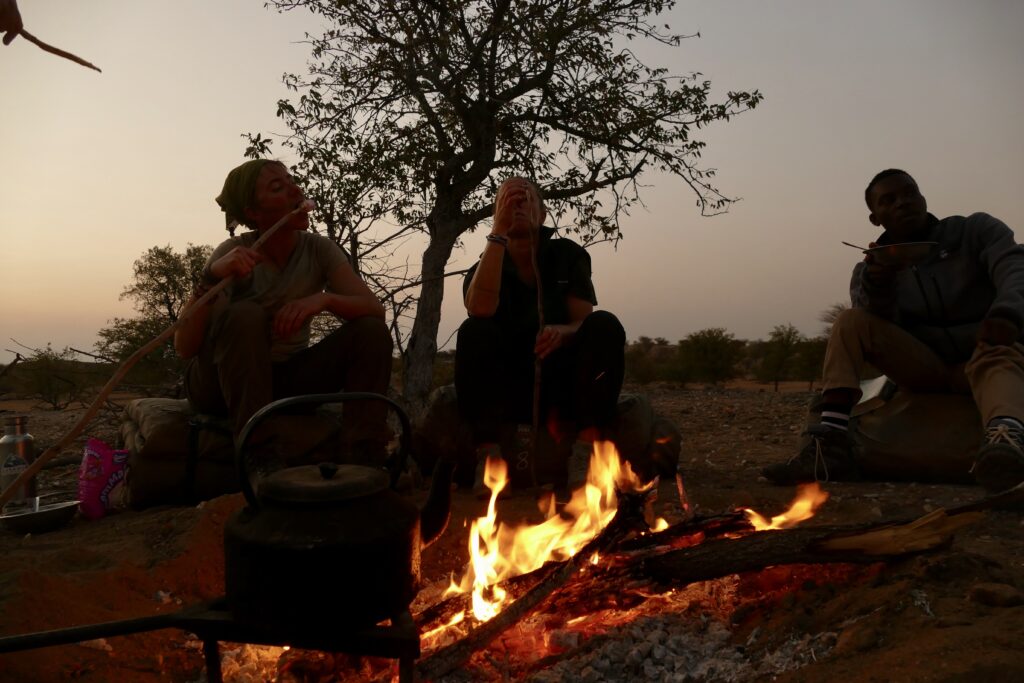 Nights are cool in the desert
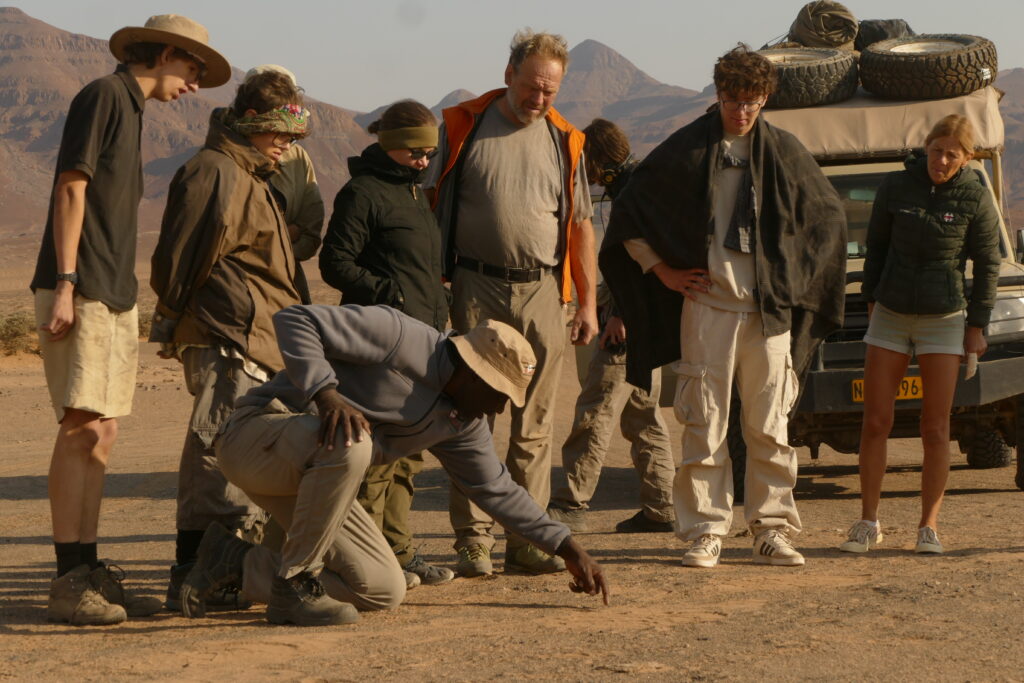 The project has been welcoming volunteers since 2004
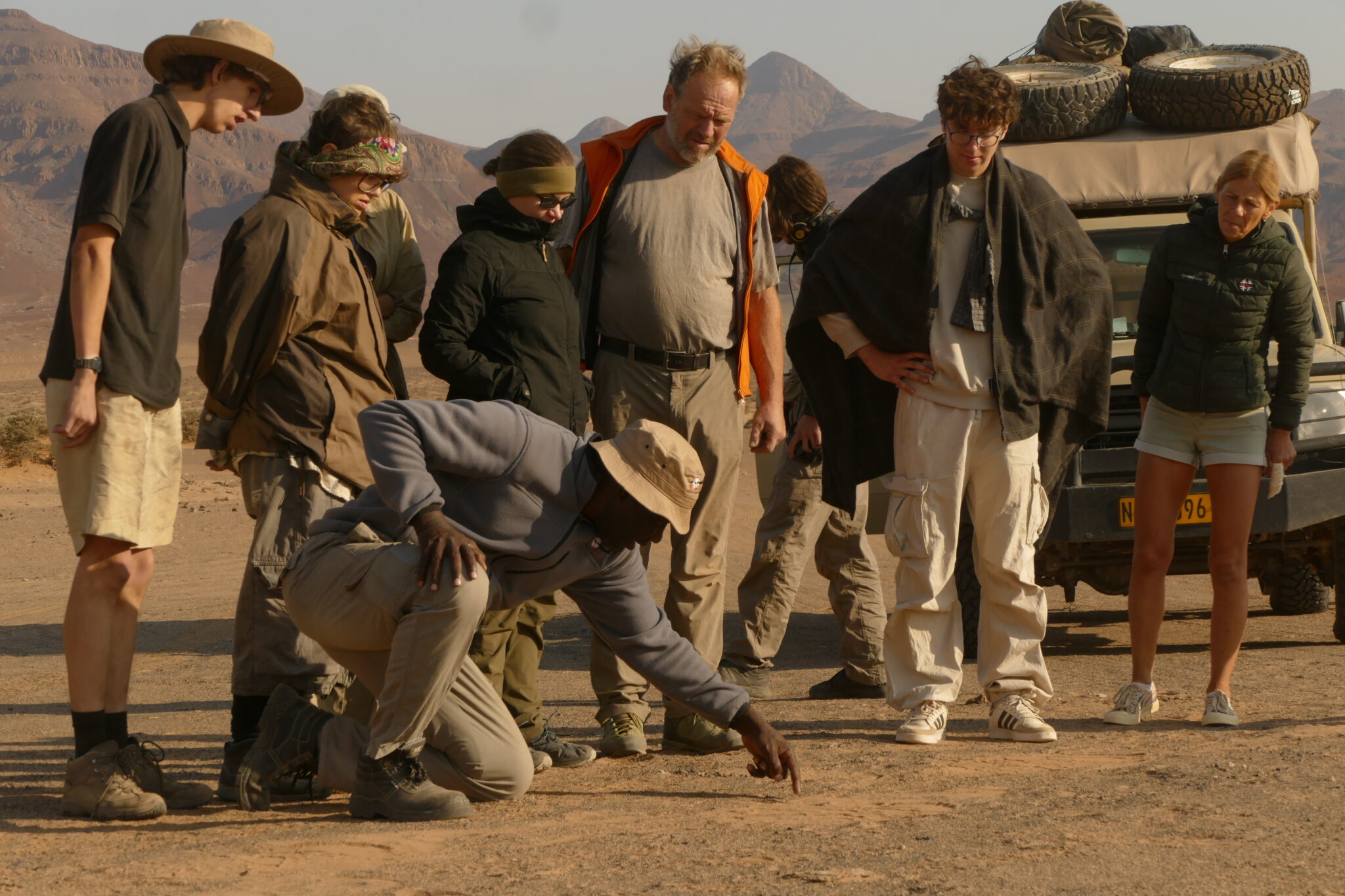
Protect desert elephants in Namibia. Get involved with an NGO working to pacify the conflict between humans and elephants over scarce water resources. Experience a wonderful adventure in breathtaking landscapes and disconnect from the modern world! All solidarity trips in Africa here.
Protecting desert elephants in Namibia
Since 2003, our partner Elephant-Human Relations Aid (EHRA) has been dedicated to implementing holistic solutions to human-elephant conflicts. The organization's aim is to protect the elephant population of Southern Damaraland, Namibia, through measures to combat these conflicts.
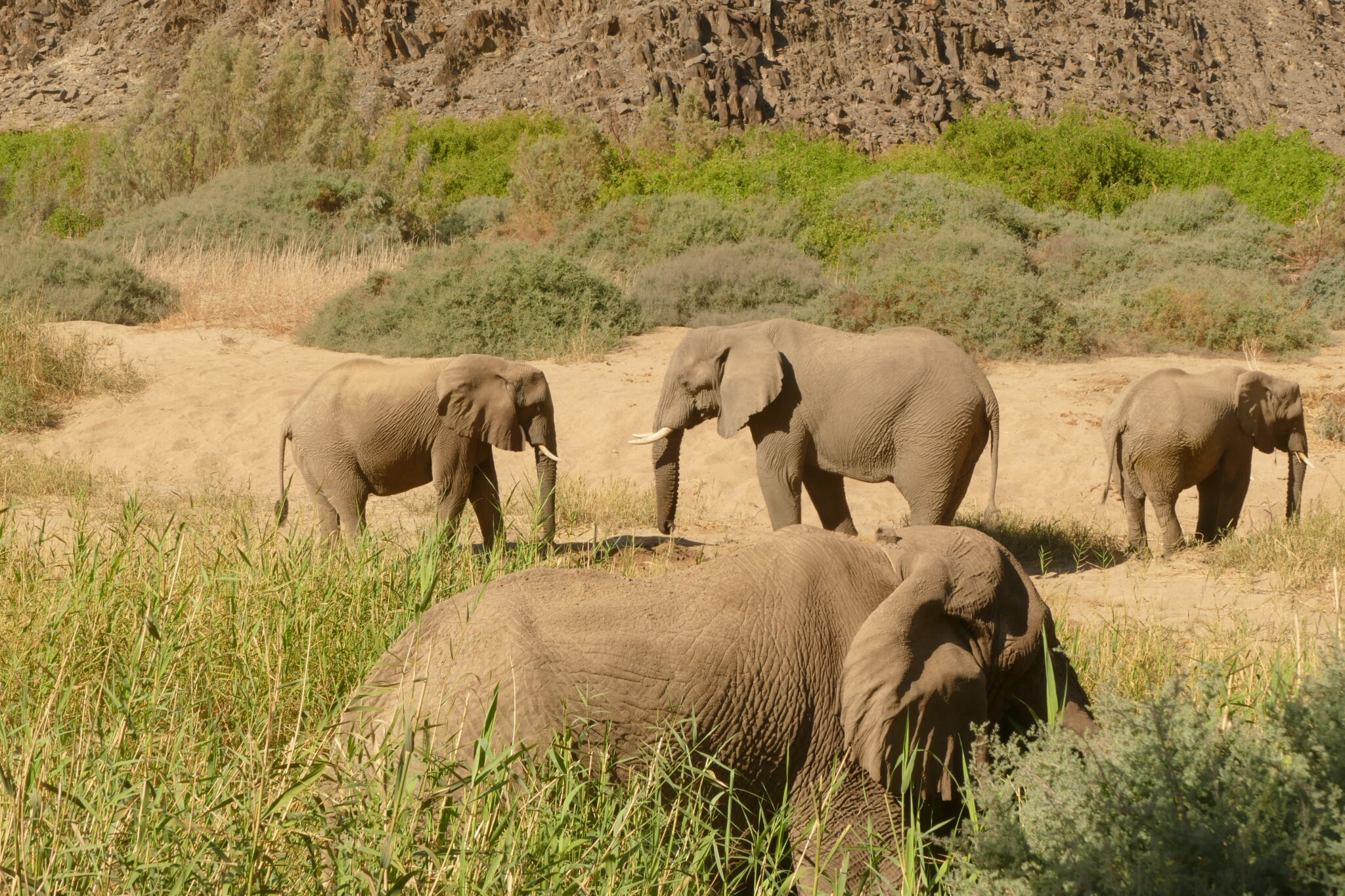
Elephants adapted to the desert
Desert elephants, or desert-adapted elephants, are not a separate species of elephant, but are African bush elephants (Loxodonta africana) that have made deserts their home. Although they were absent from the Kunene region in the 1980s because they were hunted, they returned in 1998, causing damage to homes and wells. They then came into conflict with rural communities who were not used to cohabiting with hordes of elephants. This conflict was exacerbated by the scarcity of resources, particularly water. In their search for clear water, elephants are in competition with village populations for whom water is a precious commodity.
In a bid to pacify the relationship between humans and elephants, the partner NGO is implementing solutions in the areas affected by this conflict:
- Protecting water points on local farms;
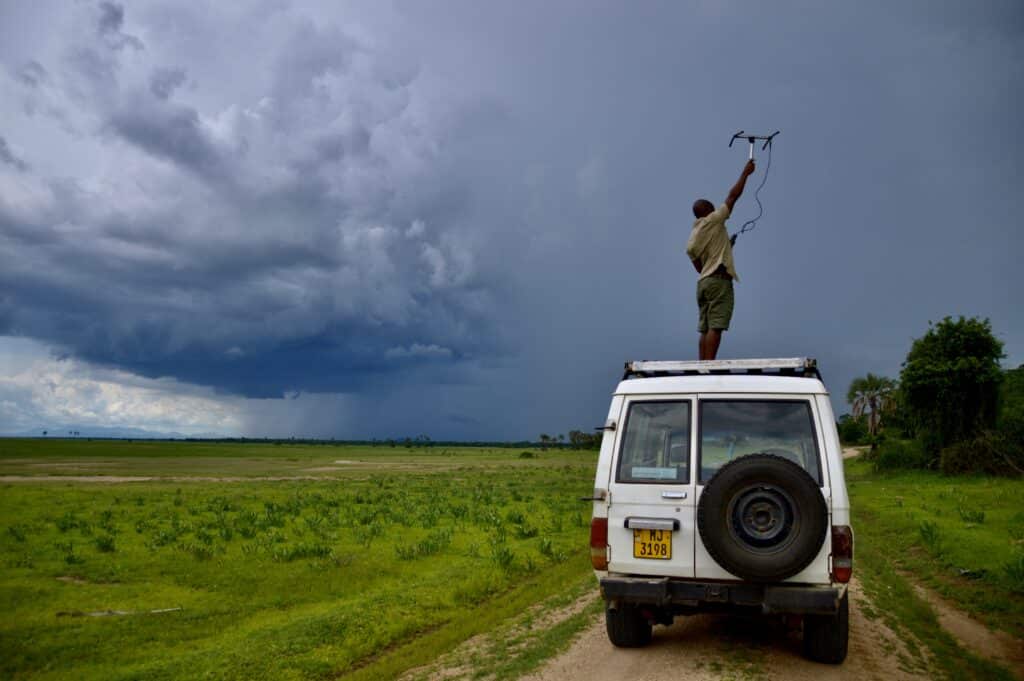
- Vehicle patrols to track and monitor elephants;
- Educational program for local communities to promote harmony between elephants and the local population.
EHRA is a pioneer in offering participative vacations. The first group of volunteers was welcomed in 2004. In 20 years, the organization has welcomed over 3,000 volunteers who have helped build over 200 protective walls around water points.
Wall construction and elephant monitoring
The mission of the partner NGO is to pacify relations between humans and elephants in the Kunene region, who are in competition around water points. The volunteer program focuses on building walls around the water points and monitoring the elephants. Stays take place in two-week rotations. You can link several rotations together.
First week (wall construction)
- Protect hydraulic infrastructures by building protective walls.
- Ensure that elephants have access to water without causing damage.
- Collect rocks for wall construction.
Second week (itinerant patrols)
- Collect data on elephant movements.
- Use data to establish a strategy for protecting water points.
- Visit farmers to identify and mitigate conflicts.
- Document births, deaths, injuries
- Identification photos
- Note physical traits, personalities and herd dynamics.
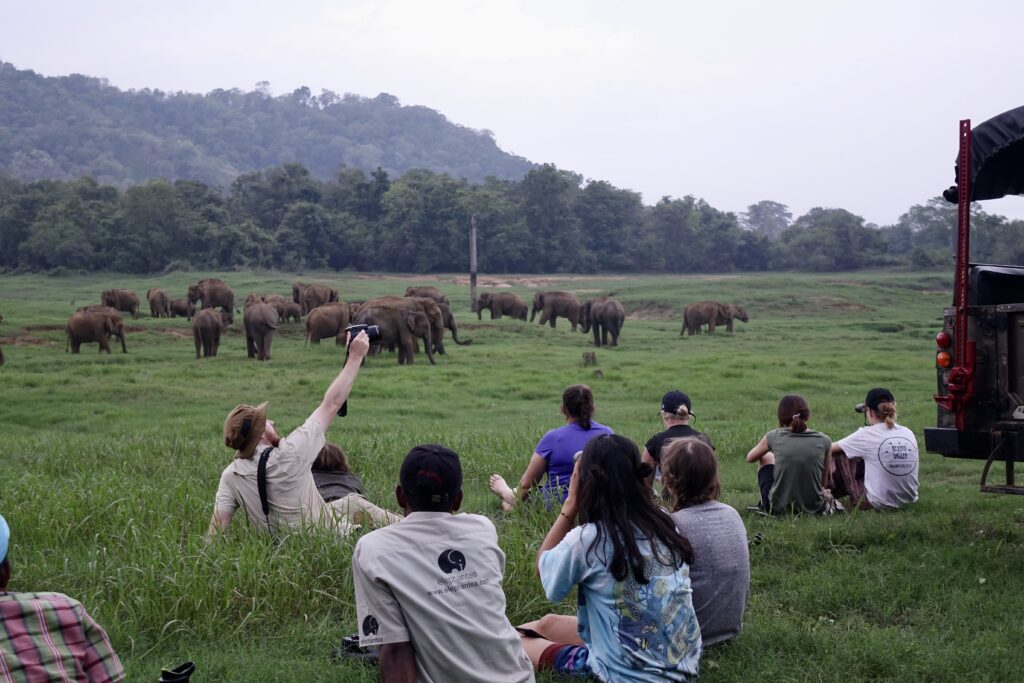
- You'll see elephants roaming freely, as well as black rhinoceros, oryx, hyenas, leopards, cheetahs, ostriches...
- Damaraland is home to a wide variety of reptiles, including the Namaqua chameleon and several species of geckos.
Solidarity and participative stays for families
Twice a year, the partner organization offers a stay open to families with children. These stays last 10 days. You start with a school-based construction project. The children attending the school live on farms where elephants roam, so they need to grow up with the skills and knowledge they need to coexist amicably with elephants. The project can vary according to the needs of the moment. Afterwards, you'll set off to identify elephants and observe other animals. Fun and creative activities are planned, all focused on nature and teamwork.
Dates
Between 2 and 12 weeks, all year round, except for the last two weeks of December and the first week of January. Assignments take place on a 2-week rotation. Start of each assignment below.
- Monday 5/01/2026
- Monday 19/01/26
- Monday 2/02/26
- Monday 16/02/26
- Monday 2/03/26
- Monday 16/0326
- Monday 30/03/26
- Monday 13/04/26
- Monday 27/04/26
- Monday 11/05/26
- Monday 05/25/26
- Monday 8/06/26
- Monday 06/22/26
- Monday 6/07/26
- Monday 07/20/26
- Monday 3/08/26
- Monday 17/08/26
- Monday 31/08/26
- Monday 09/14/26
- Monday 09/28/25
- Monday 12/10/26
- Monday 26/12/26
- Monday 9/11/26
- Monday 23/11/26
- Monday 7/12/26
Rates
| Mission duration | Rates (adults) |
|---|---|
| 2 weeks | 950 £ approx. 1147 € approx. |
| 4 weeks | 1850 £ approx. 2233 € approx. |
| 6 weeks | 2630 £ approx. 3175 € approx. |
| 8 weeks | 3460 £ approx. 4177 € approx. |
| 10 weeks | 4200 £ approx. 5070 € approx. |
| 12 weeks | 4730 £ approx. 5710 € approx. |
Prices in € may vary according to exchange rate
| Family holiday dates children aged 8 to 16 | Rates |
|---|---|
| From Monday 27/07/2026 to Wednesday 05/08/2026 | Adults: £975 (approx. €177) - Children: £925 (approx. €1117) |
| From Monday 10/08/2026 to Wednesday 19/08/2026 | Adults: £975 (approx. €177) - Children: £925 (approx. €1117) |
Included in price
- Transfer from Swakopmund to base camp and return after project completion
- Equipment required for the 2 weeks
- Tent if necessary. You normally sleep in a large military tent, or under the stars.
- 3 meals (breakfast, lunch, dinner)
- Coffee, tea, fruit juices, fruit.
Not included in price
- Airport/Swakopmund transfers. This is an additional cost borne by the volunteer.
- Accommodation in Swakopmund for the night(s) before and after the project.
- If you come for more than 2 weeks, accommodation in Swakopmund for the weekend between two stays.
- Any other snacks or drinks not provided by the partner.
- Airline tickets
- Travel insurance
- From age 18
- From 2 to 12 weeks
- Two special sessions for families with children aged 8 to 16
- Families with children over the age of 16 are invited to join the classic volunteer program.
- Language: English (basic level)
Housing
EHRA's Base Camp
Ecovolunteers stay at EHRA's Base Camp on the first night, last night and weekends. You'll sleep on a platform in a large tree, or in a tent. Showers and toilets are outside. WIFI access is available (intermittent).
Wilderness camping
The first week, you'll be camping in the same place. The second week (patrol week), you'll be camping in the wild, moving around regularly. No toilets.
Meals
Please indicate any special dietary requirements when booking.
Number of volunteers
The number of volunteers per group is 16
Security
EHRA operates in safe areas for all activities...
Arrival
EHRA will book your transfer between the airport (Walvis Bay Airport or Windhoek Airport) and the town of Swakopmund. It will also guide you in choosing your accommodation in Swakopmund. The organization will pick you up in Swakopmund on Monday at 11 a.m.
For your arrival flight, if you land in Windhoek, arrive on Sunday before noon. When you book a return flight, if it's from Windhoek, make sure you don't get on the plane before 2 p.m. on the Saturday following the end of your volunteering project.
Takeaway
You're going to get dirty! You'll have a chance to do some laundry after a week.
Work gloves; Hat / cap; Comfortable, lightweight trekking shoes or similar; Camp sandals (you should always have shoes!); Sunglasses; Fleece sweater (and warm jacket, as it can get quite chilly at night during the winter months); Lightweight, neutral-colored clothing; Lightweight, neutral-colored bush clothes (khaki, gray, beige, green - NO camouflage) for the week of patrolling,
- You'll enjoy a fabulous human experience in Namibia, in one of the world's most astonishing regions!
- You'll be working to protect desert elephants and reduce the conflict between humans and elephants over resources.
- Two dates a year are open for a family trip!
- You'll live in the heart of a desert region, camping and enjoying fabulous starry nights!
After a day's work, the volunteers like to sit around the campfire and talk about their day. On the Sunday of the first week, before the patrol week, they go to a small town, Uis, where they spend the day having lunch and catching up with family and friends (there's wifi).
All reviews on HERA
About the partner NGO
Notre patenaire is an NGO founded in 2003, which protects desert elephants while pacifying the human/elephant conflict over water resources. It operates in the Damaraland region of Namibia, using a holistic approach based on village communities, education, research and action to protect water resources. To carry out this project, it has been welcoming volunteers since 2004.